Executive summary
The errors weren't coming from bad pages. They were built into the templates.
Notarize is a large, high-traffic enterprise site. Years of growth had left it carrying thousands of crawl and indexation errors, and they kept coming back because the causes lived in the templates: bloated headings, broken links, and redirect logic that leaked.
Over about seven months we ran a full audit and worked the list down to near zero, fixing each problem at its source so the whole site got cleaner at once. Alongside that, we rebuilt the landing pages in a new design style, designed and built a new blog, and stood up a reusable component library on Webflow Enterprise so the marketing team could ship pages without a developer.
Then Notarize launched Proof. We built the launch site from their Figma files on a tight deadline, timed to the product announcement, with the same SEO discipline built in from the first line.
The project in numbers
7
months of audit and cleanup, working the error list down week by week.
1,000s
of crawl and indexation errors resolved, down to near zero.
1,000s
of dead and broken backlinks cleared or redirected.
1
component library, built on Client-First, shared across landing pages, partner pages and the blog.
Toolkit
What the audit taught us
SEO is architecture, not a checkbox.
Chapter 01
The SEO overhaul
Thousands of errors don't come from bad pages. They come from decisions baked into templates.
The headline work was technical SEO. Over roughly seven months we ran a full audit and remediation program and drove the error count down to near zero.
1,000s
Crawl and index errors resolved, down to near zero
Sitewide
Bloated H1 tags rewritten to clean, single-H1 structure
1,000s
Dead and broken backlinks cleared
How the work ran
- Crawl everything. The whole site went through Screaming Frog to surface every broken link, redirect chain, duplicate title, and malformed heading.
- Track what matters. Rankings and backlink health were tracked in Semrush the whole way through.
- Fix it at the source. Bloated and duplicated H1 tags were a recurring problem baked into templates. We rewrote them to a clean, single-H1 structure.
- Stop the leaks. Thousands of dead and broken backlinks were cleared or redirected so link equity stopped leaking.
- Make it hold. Metadata, redirects, and indexation rules were standardized so the fixes stayed fixed.
Progress wasn't a single launch moment. It was a curve that bent down week over week until the error count was effectively flat.
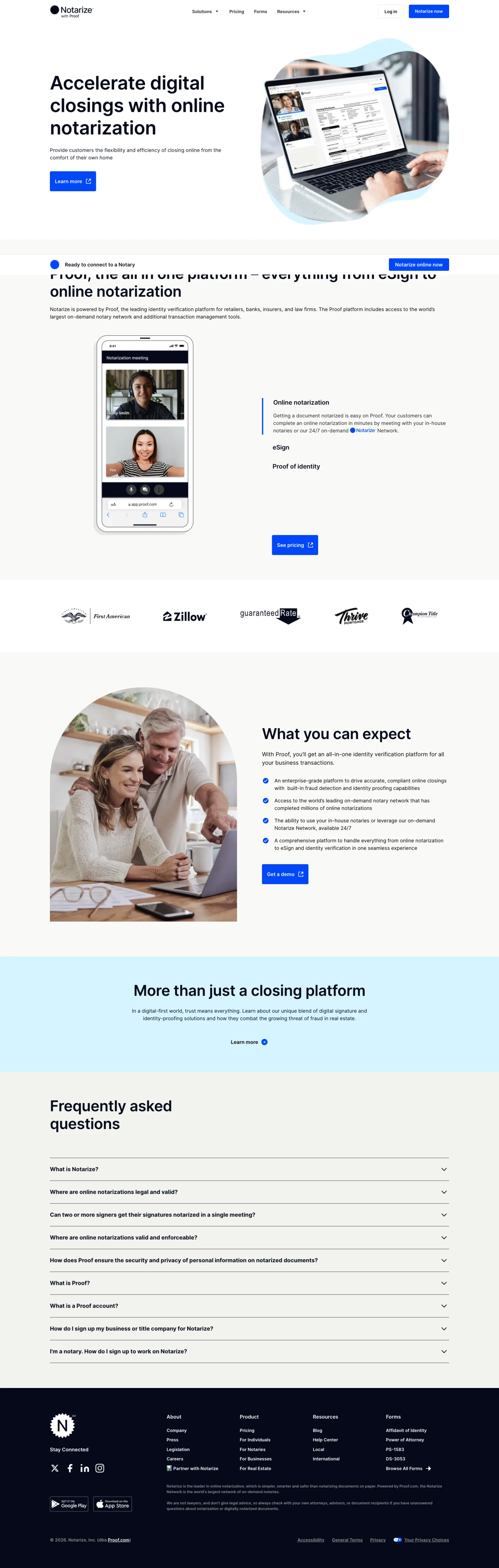
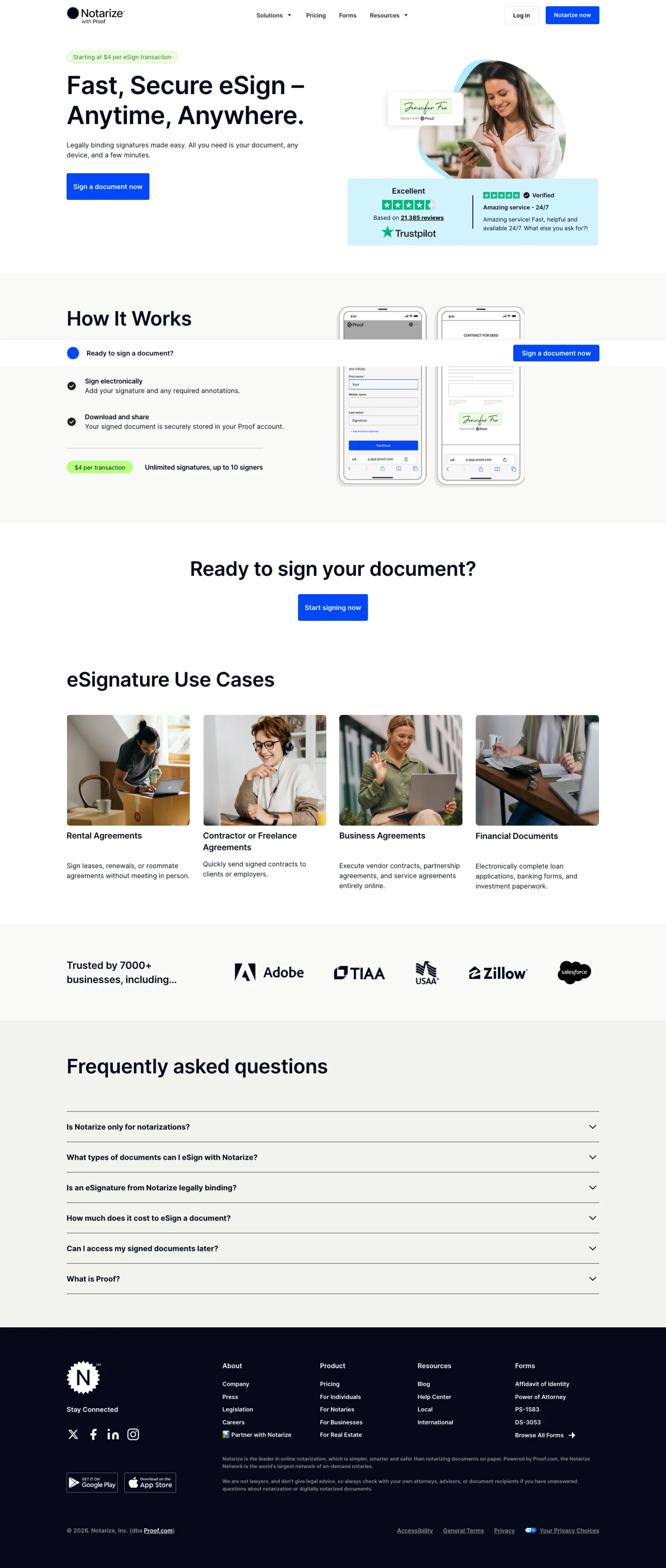
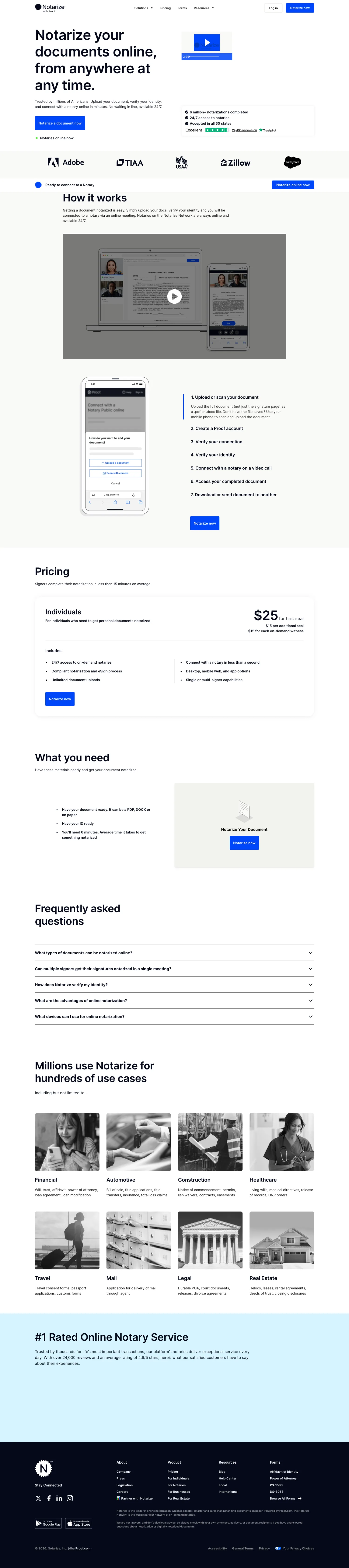
In production · notarize.com landing pages
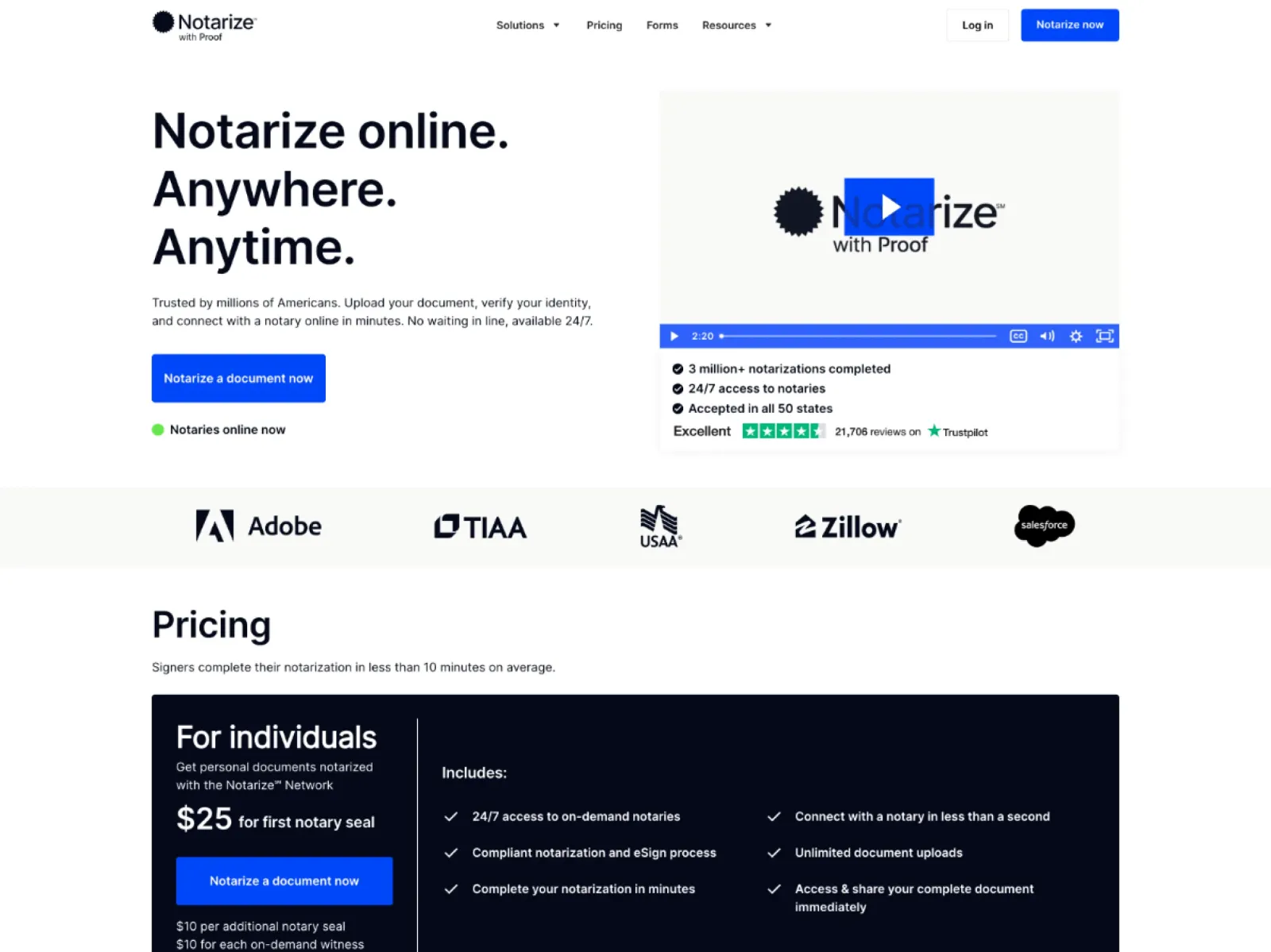
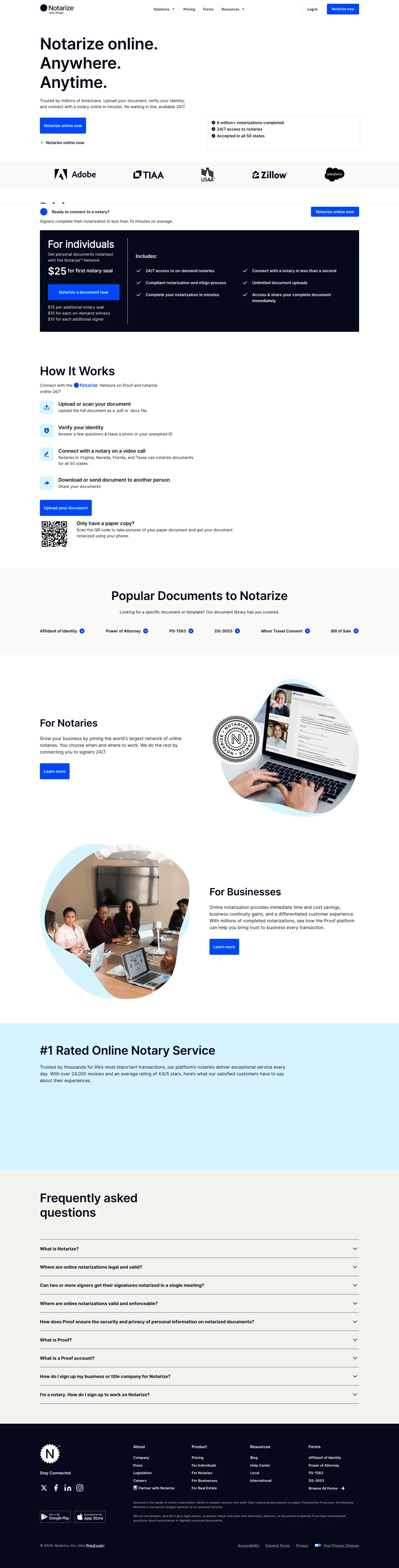
New landing pages, in a new design style.
Rebuilt in parallel with the SEO work, so the marketing team could ship new pages fast without rebuilding layouts from scratch each time.
Chapter 02
The component system
The real deliverable wasn't any one page. It was the system underneath them.
We stood up a new component system on the Webflow site: most of the development, plus design work in Figma. It is built with the Finsweet Client-First method, the same class and structure system we used across both Notarize and Datafold.
Made for enterprise teams
A reusable Webflow library made specifically for enterprise clients: predictable naming, no style bloat, and components a marketing team can assemble into new pages.
Assembly, not bespoke work
Client-First turned page-building into assembly. The team could stand up a new landing page or partner page from existing components, without a developer in the loop.
One system, everywhere
One blog system, one component library, one heading structure beats a dozen clever one-offs.
Coherence keeps SEO clean
On a site this size, consistency is what keeps the SEO clean, the CMS manageable, and the brand intact.
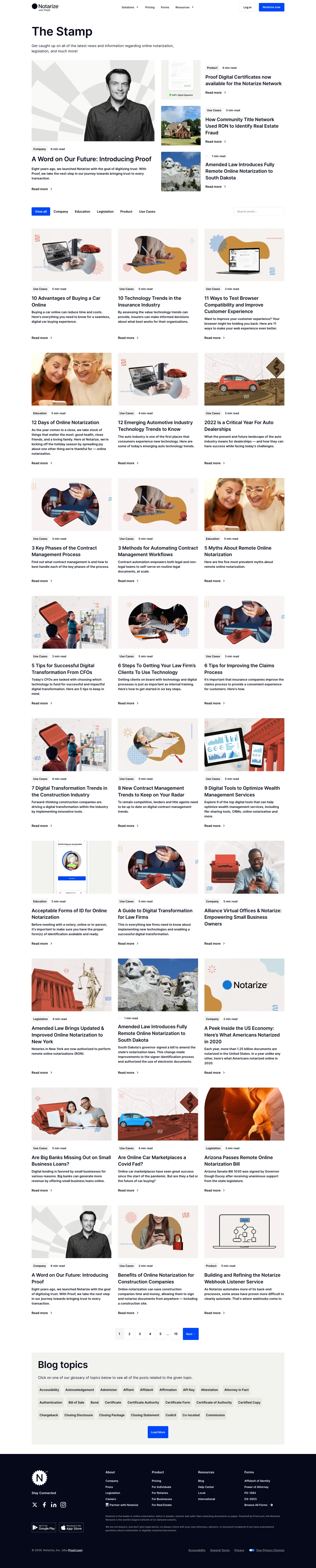
In production · The Stamp
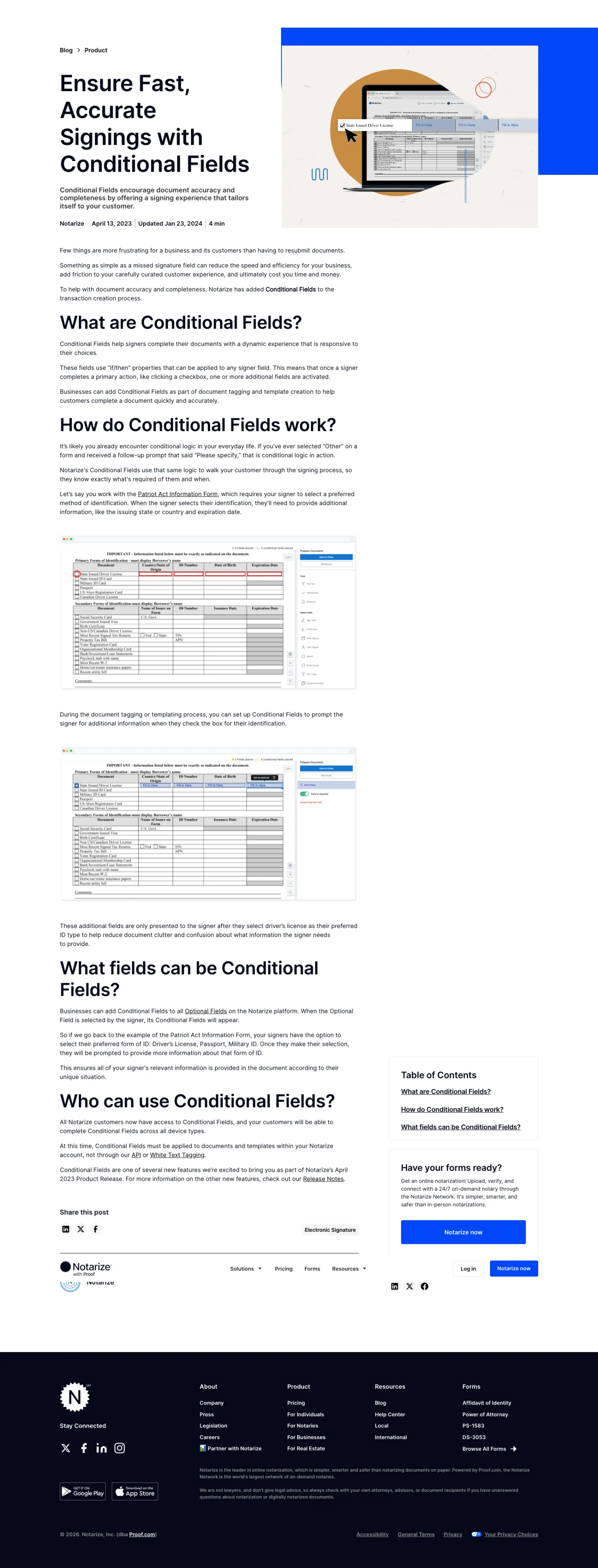
A new blog the content team runs themselves.
Designed and built in the same system: a featured lead, category filtering, a consistent illustrated card grid, and a topic tag cloud, plus a clean article template with a table-of-contents rail. All of it is CMS-driven.
Chapter 03
Testing and social proof
Beyond the rebuild, the homepage kept getting tested.
Homepage experiments tested layout and messaging variations, each against a clear hypothesis.
A Trustpilot widget was embedded at the right point in the journey: after the value proposition and before the conversion ask. There it read as a trust signal, not decoration.

Then Notarize became Proof
There was no buffer on Proof. The website had to be live when the product went public.
Chapter 04
The Proof launch
A new product, a fixed date, and a site that had to be findable on day one.
As a new product, Proof needed a website that would introduce the brand within a tight turnaround: easy to use, fast, and ready for search so it could drive leads at launch.
Figma to Webflow
We worked closely with Proof's internal team to build the Webflow site directly from their Figma files, holding fidelity to the designs while keeping the build technically sound and fast.
SEO from the first line
Clean HTML structure, proper metadata, and a performant architecture were built in from the start, so Proof could be found organically from the day it launched.
Ask before building
The Figma files were the primary handoff. Reading them carefully and flagging unclear spots early prevented costly corrections mid-build and kept the timeline intact.
Preparation, not speed
Hitting the launch date came from making the architecture decisions up front, not from moving fast under pressure.
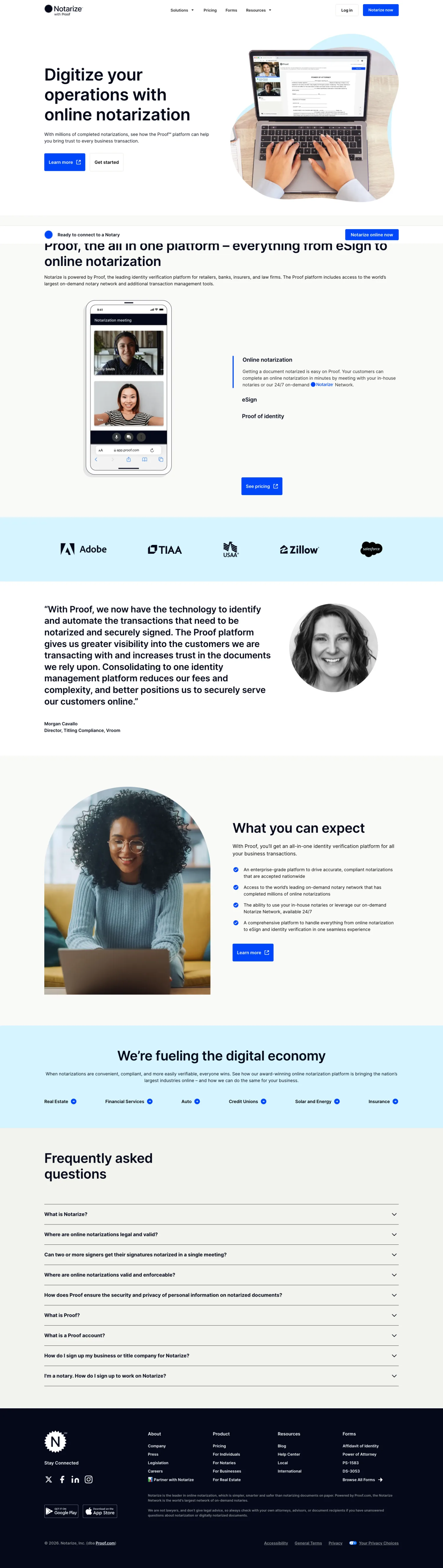
In production · the Proof launch site
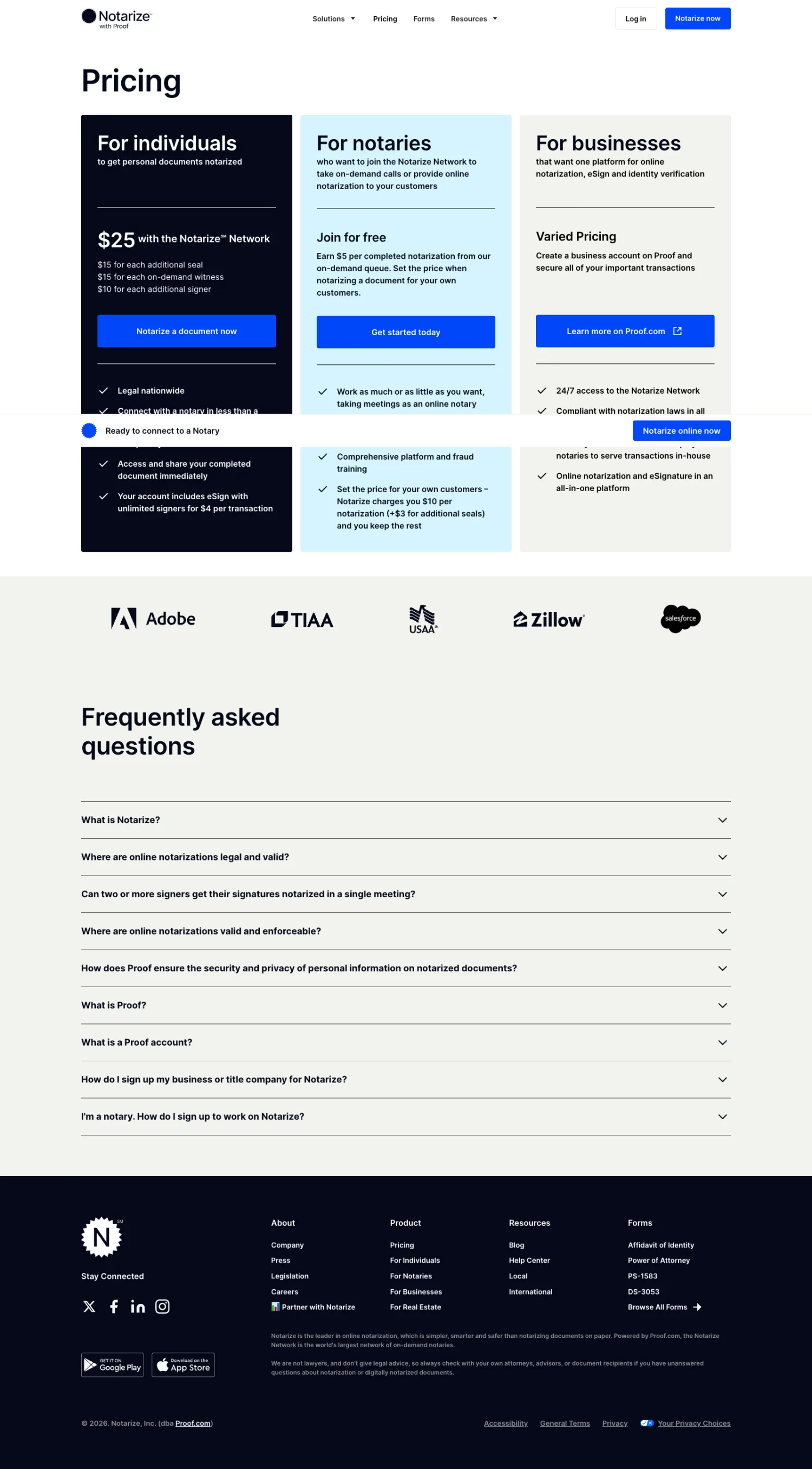
In production · Partner and pricing pages
Assembled from the same parts.
New partner pages came from existing components, which is what the system was for.

Results
What shipped.
A clean technical foundation, a faster way to build pages, a blog the team owns, and a launch site that went live with the product.
| Area | Before | After |
|---|---|---|
| Search | Thousands of crawl and indexation errors that kept coming back. | Near zero, with the causes fixed in the templates. |
| Headings | Bloated and duplicated H1 tags across the site. | A clean, single-H1 structure sitewide. |
| Links | Thousands of dead and broken backlinks leaking link equity. | Cleared or redirected. |
| Page building | Layouts rebuilt from scratch for each new page. | New landing and partner pages assembled from a component library. |
| Proof | A new product with no website. | A launch site live on the day of the announcement, ready for search. |
We publish numbers when they are real, never before. The counts here are the ones the audit tools reported; nothing on this page is an estimate of traffic or revenue.
What held it together
Consistency is the deliverable on a large site.
Reflections
What we learned.
SEO is architecture, not a checkbox.
Fixing thousands of errors meant fixing the H1 pattern, the redirect logic, and the link structure at the source, so the whole site got cleaner at once.
Cleanup compounds.
Every dead link cleared and heading fixed made the next crawl cleaner and the rankings steadier.
A component system is what makes enterprise speed possible.
Page-building became assembly. The marketing team could stand up a page from parts that already existed.
SEO foundations can't be added later.
Building in metadata, semantic structure, and performance from the first line costs almost nothing. Adding it after launch costs far more.
Tight deadlines reward preparation.
A clean system built deliberately is always faster to finish than an improvised one built in a hurry.
A launch tied to an announcement raises the stakes.
With no buffer, QA discipline stopped being optional.


A site that stopped fighting its own search results, and a team that can build on it without us.
Notarize, now Proof · notarize.com · proof.com
View live siteNext case study