Method
Why I Did This
Why Independent Artists
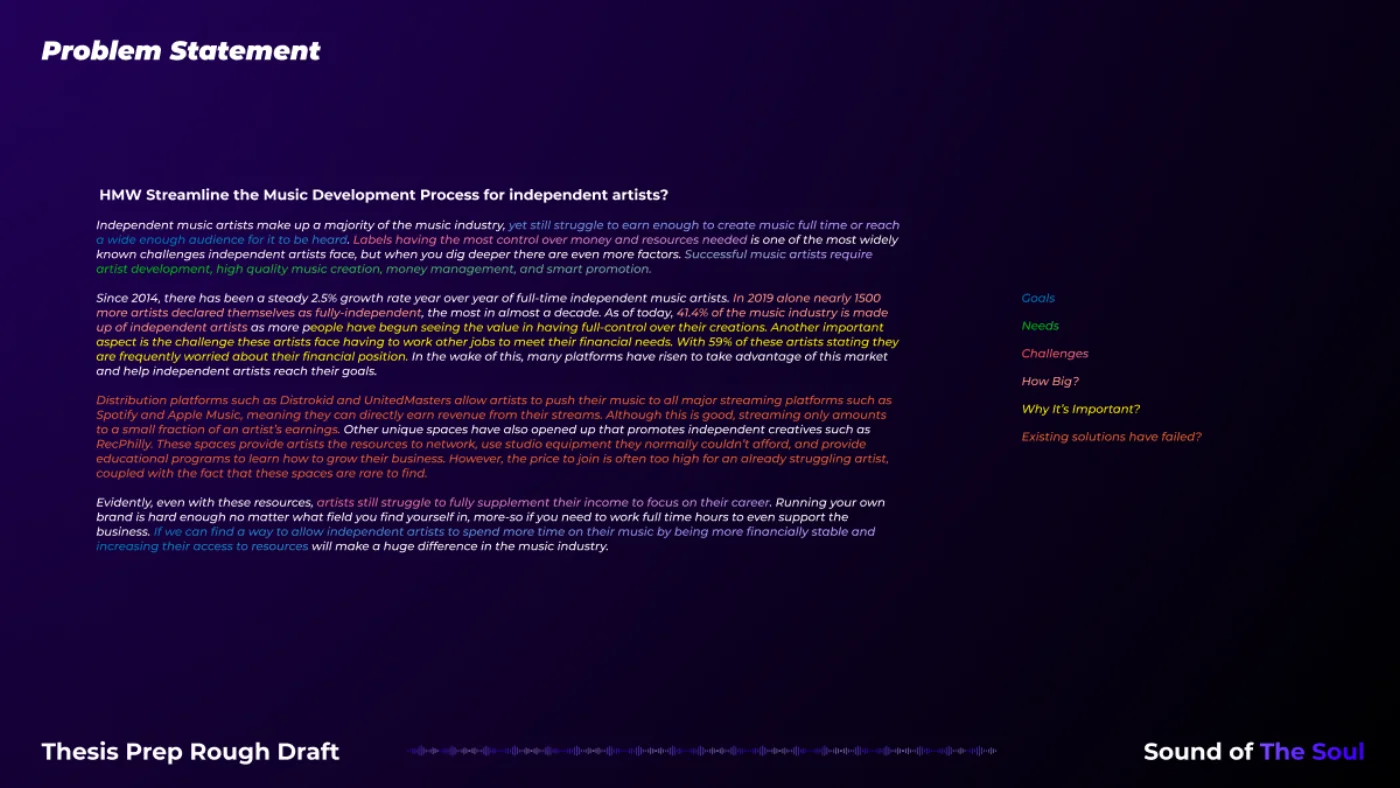
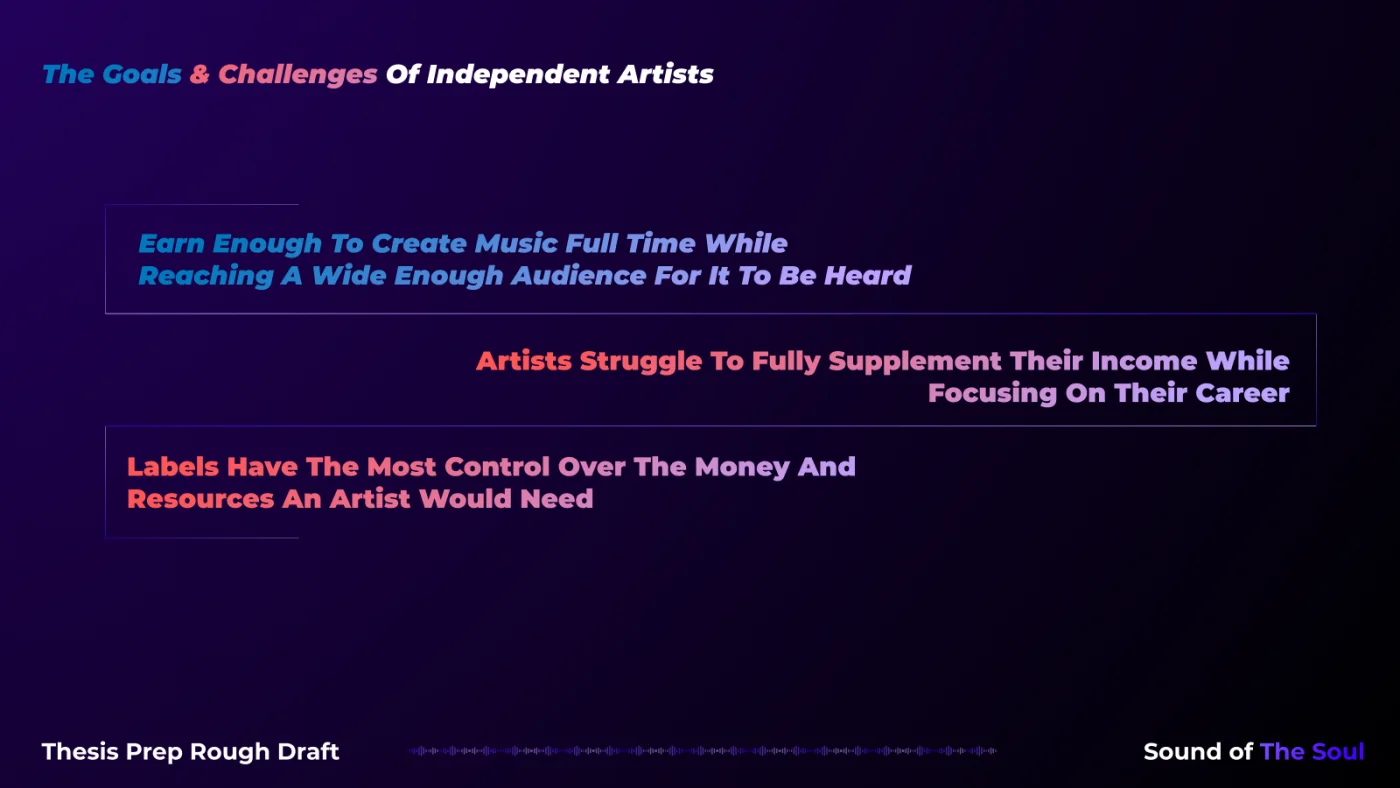
Philadelphia has no shortage of independent talent. What's harder to find is the money to keep making music, and harder still to find is anyone asking artists directly what that actually costs them.
Before I talked to a single artist, I went looking for the size of the problem. Independent artists now make up 41.4% of the music industry, the largest share it has ever had, as more people see the value in owning their masters outright. Despite that shift, 59% of those same artists say they're frequently worried about their financial position. That gap, between "biggest group in the industry" and "still can't pay the bills," is where this project started.
12
Independent artists interviewed
3
Rounds of synthesis
2
How-might-we iterations
4
Episodes live on YouTube today
This page covers the story. The original thesis deck has every slide, if you want to page through the source material yourself.
What the Early Research Already Showed
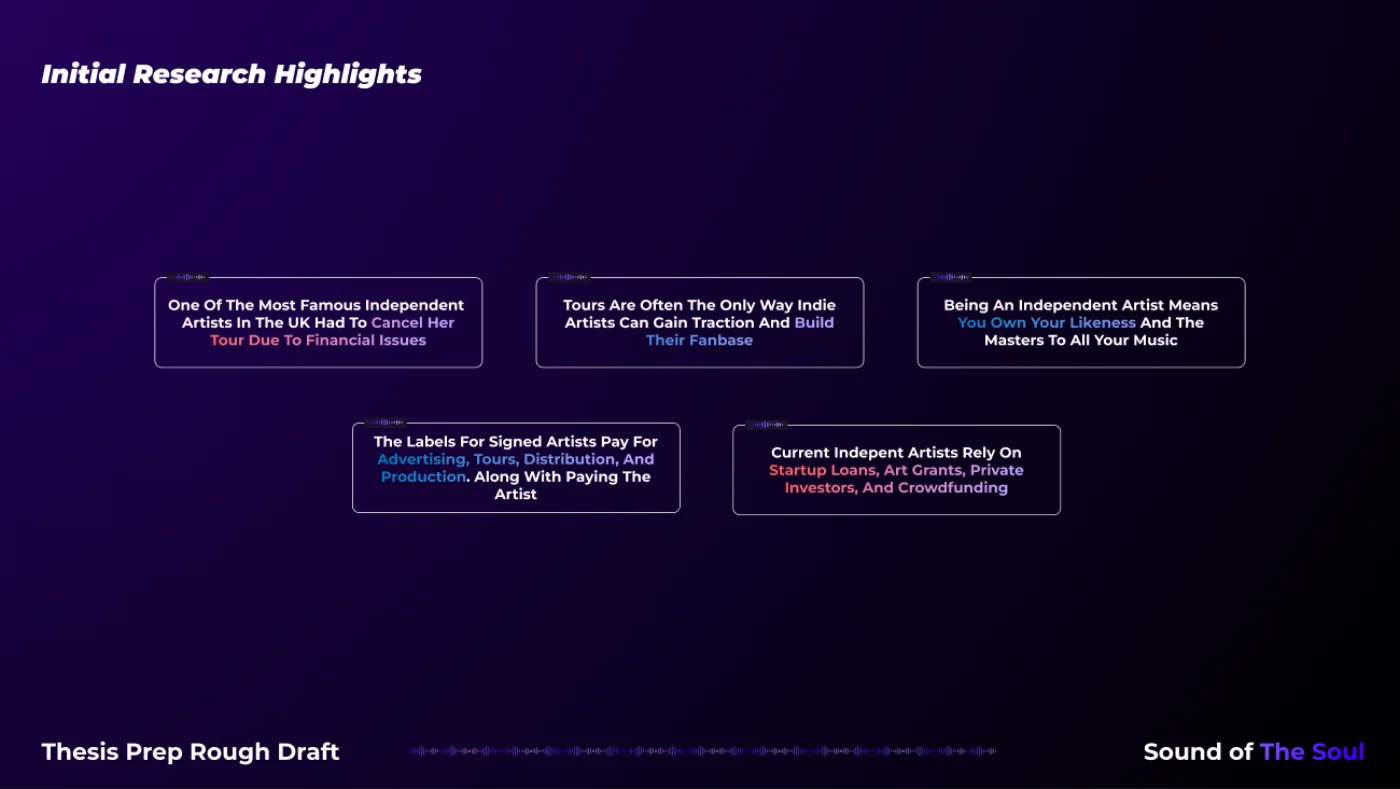
A round of desk research before any interviews turned up the same pattern from a different angle. One of the most famous independent artists in the UK had to cancel a tour over financial issues. Touring is often the only real way an independent artist builds a fanbase, but going independent also means owning your masters and your likeness outright, with none of the advertising, tour, distribution, and production budget a label would normally cover. Without that backing, independent artists lean on startup loans, art grants, private investors, and crowdfunding to make up the difference.
Where I Started
The Initial Question
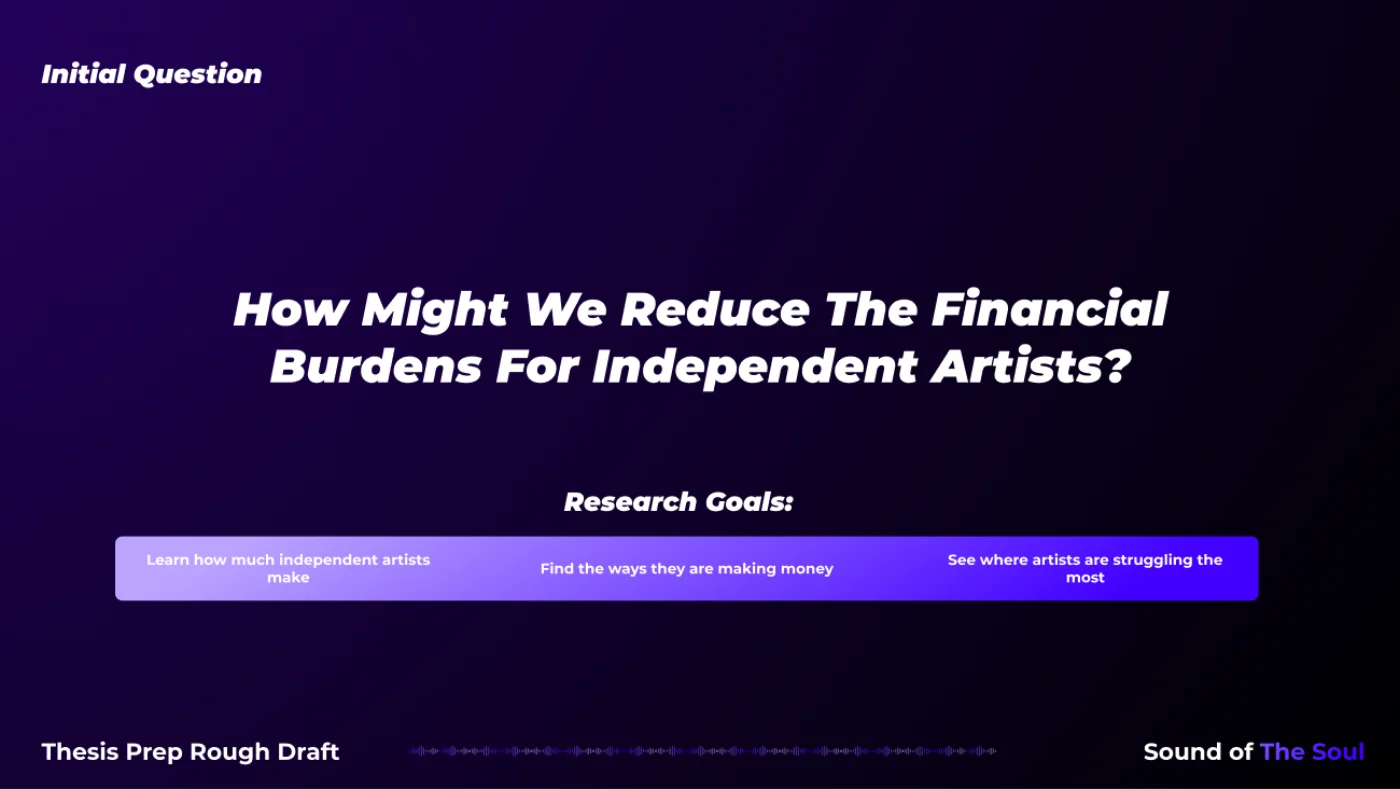
The project began with one question: how might we reduce the financial burdens for independent artists? I set three goals for the research that followed: learn how much independent artists actually make, find the different ways they make it, and see where they're struggling the most.
My Role
Research Lead, Interviewer, Editor, Designer
This was a solo project start to finish. I recruited and interviewed every artist, shot and edited every episode, ran all three rounds of synthesis, and designed the brand and product work that came out of it.
Eight episodes were recorded in total. Four are live on YouTube today, with more finished and on the way.
The Artists
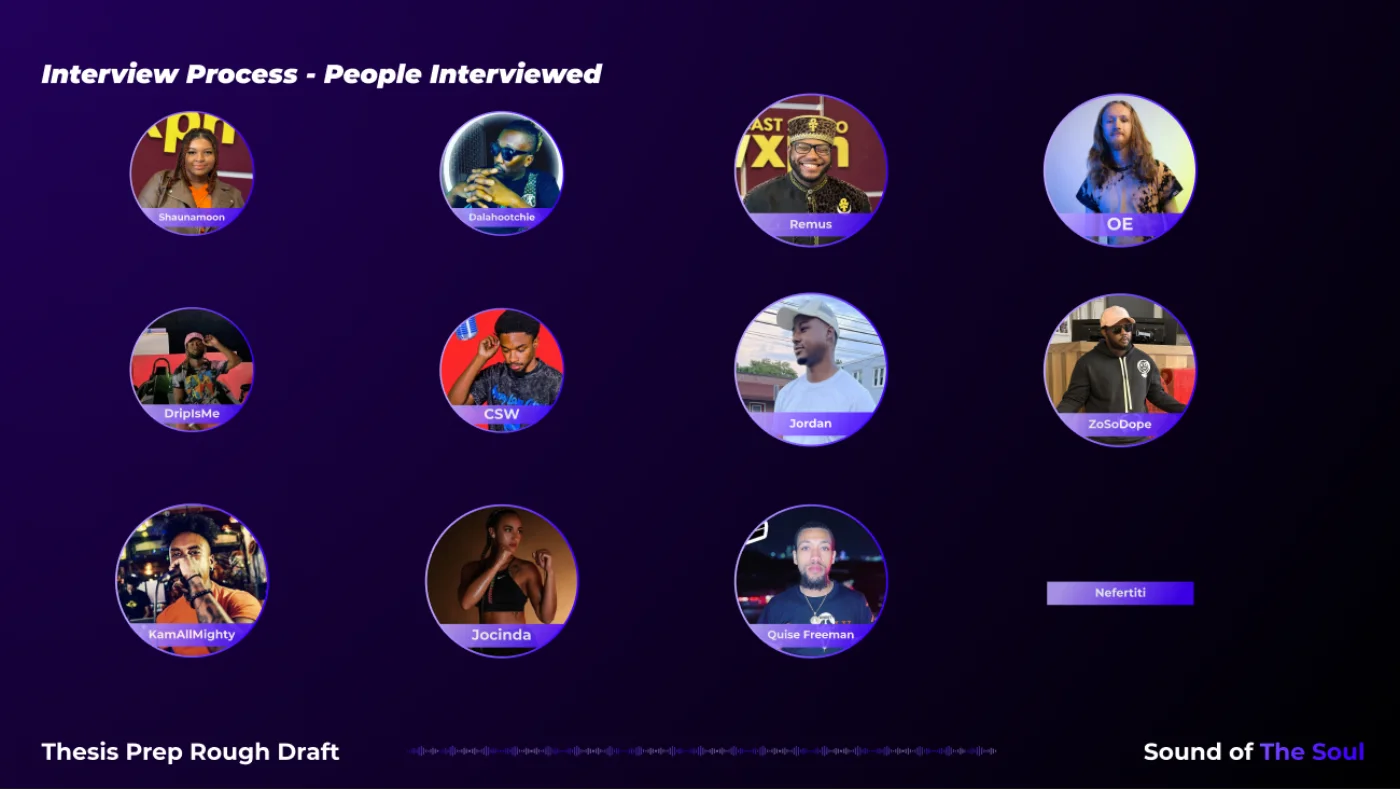
Twelve Conversations, One Question Each Time
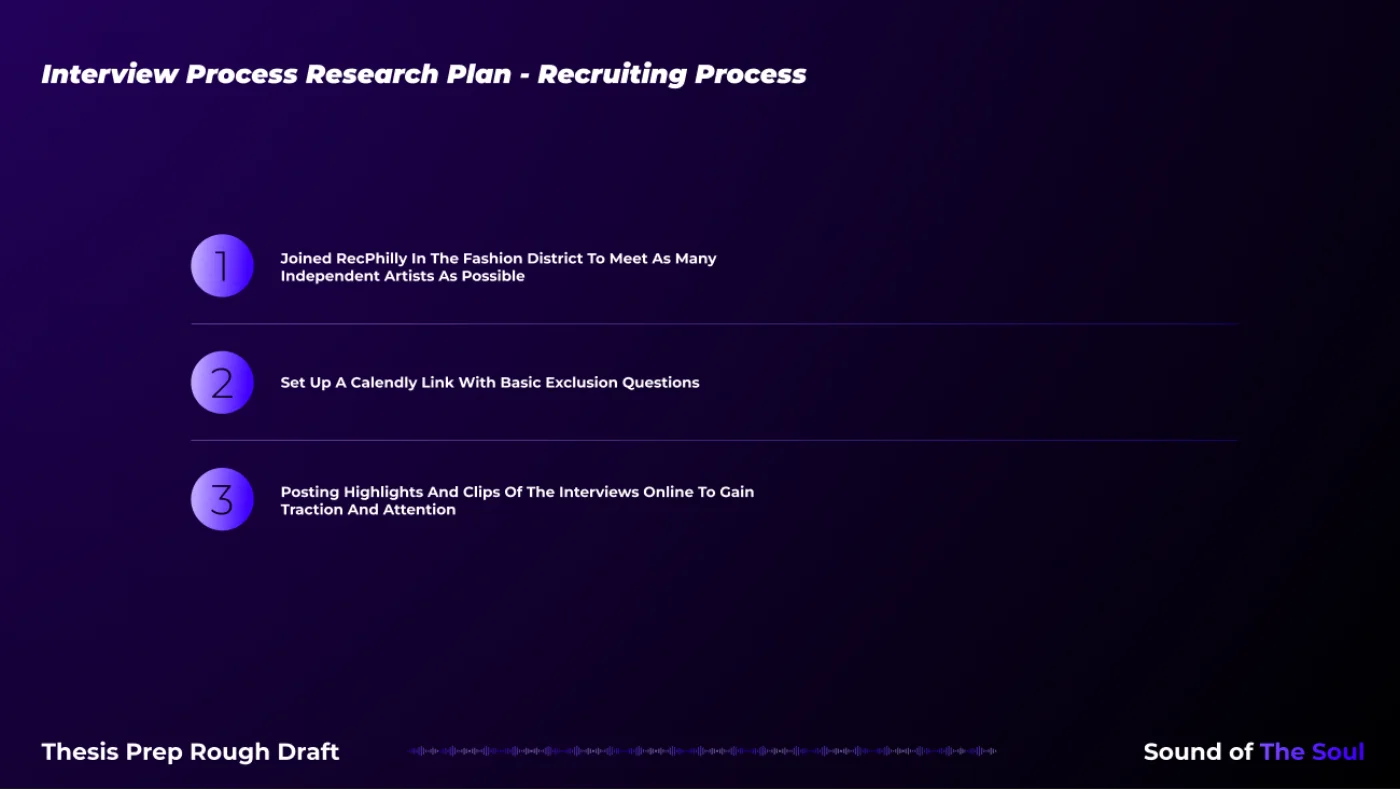
I recruited by joining RecPhilly in the Fashion District, a shared studio space built for independent artists, and meeting as many people there as I could. From there I set up a Calendly link with a few basic exclusion questions, and posted highlights and clips from the interviews online to build momentum for the next ones.
What Came Up Immediately
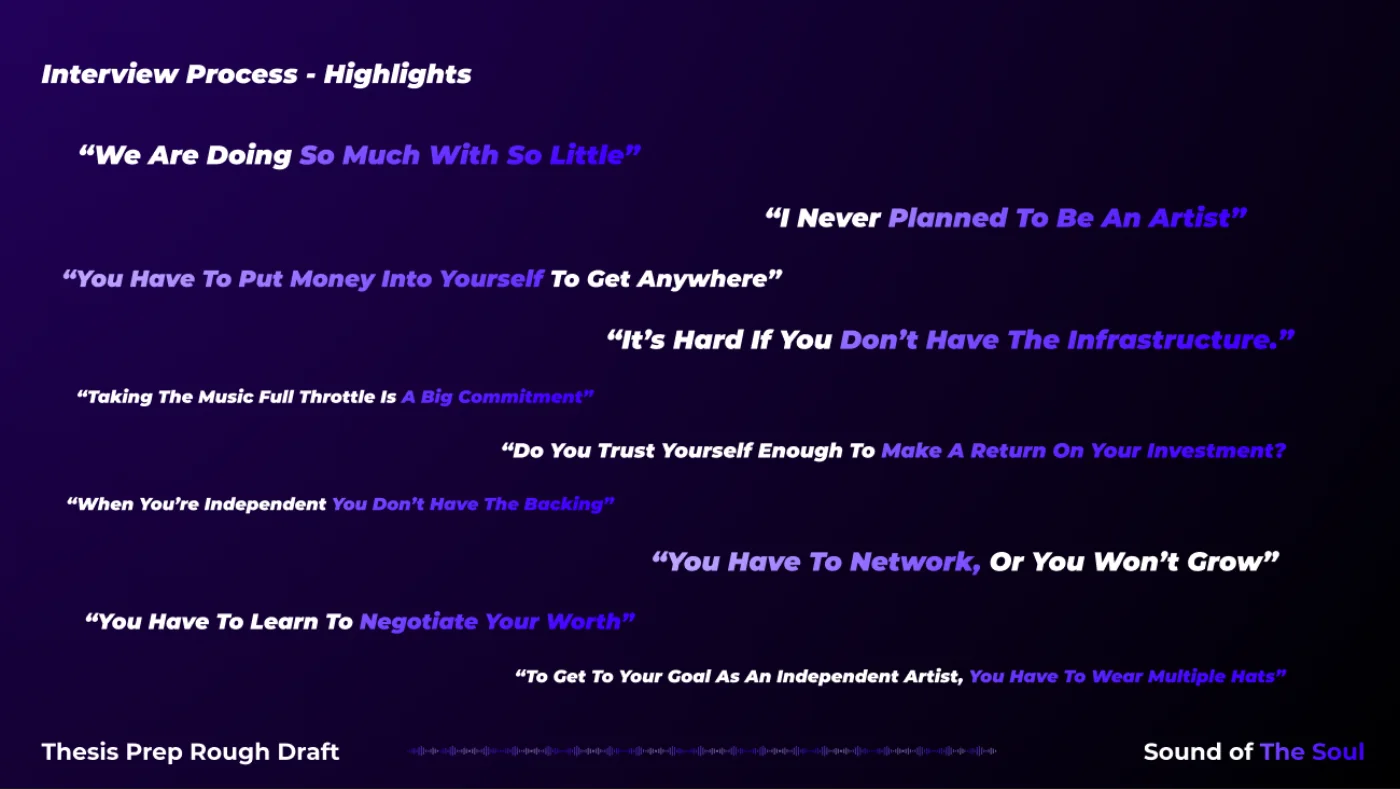
Some of the same lines came up across completely different genres and career stages.
Meet the Artists
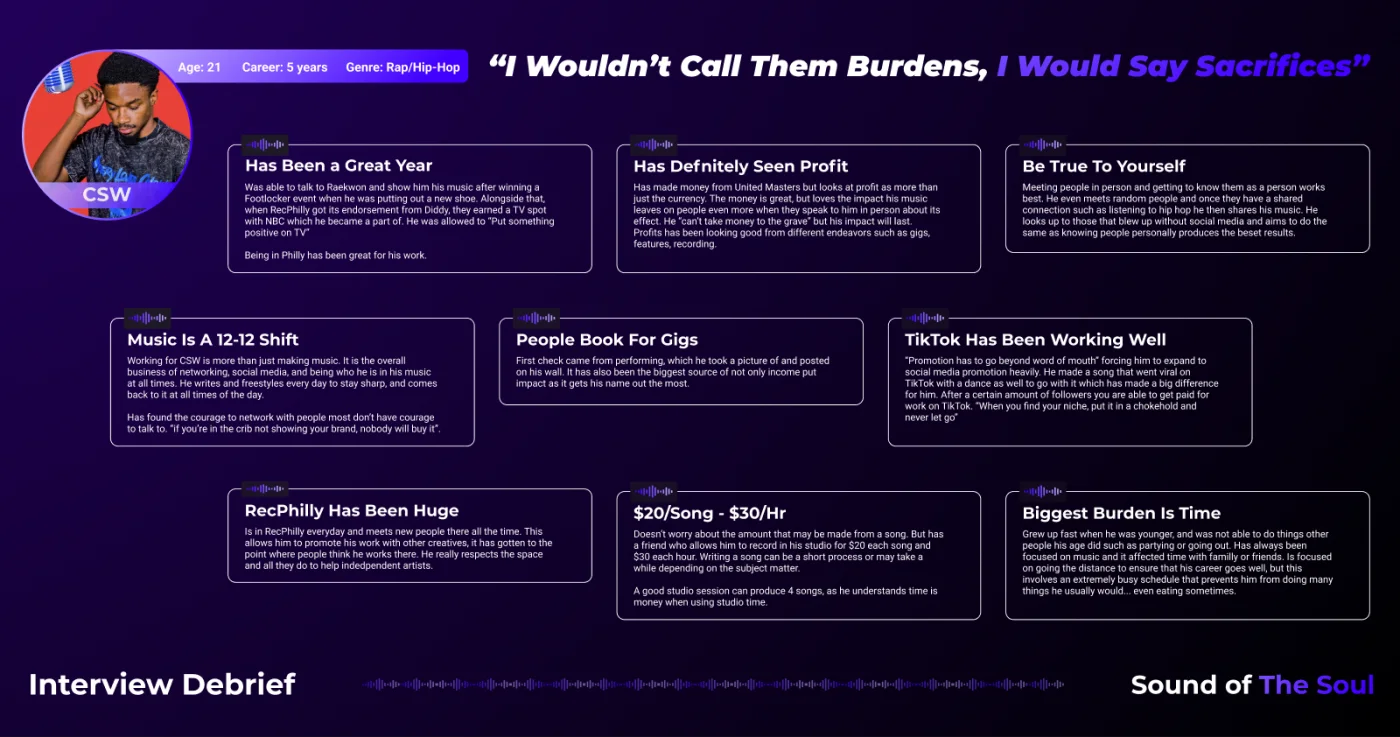
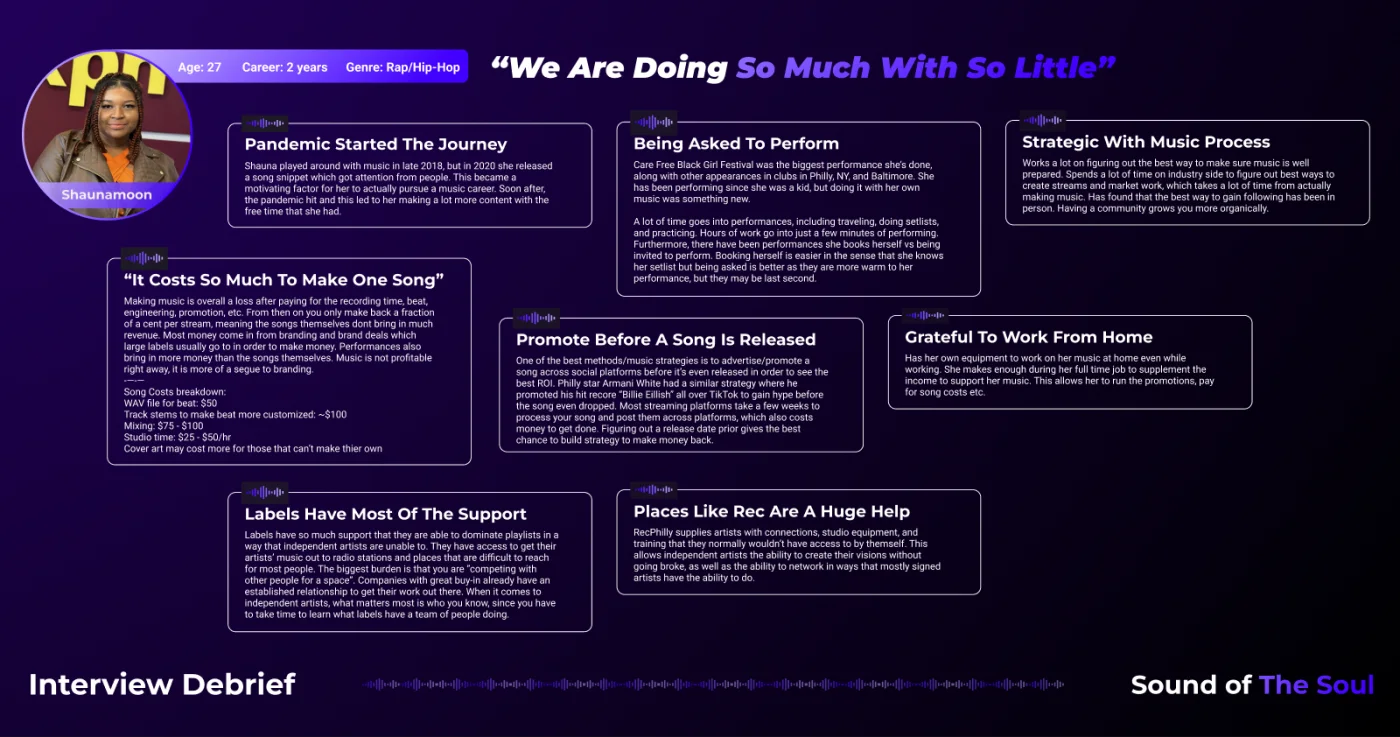
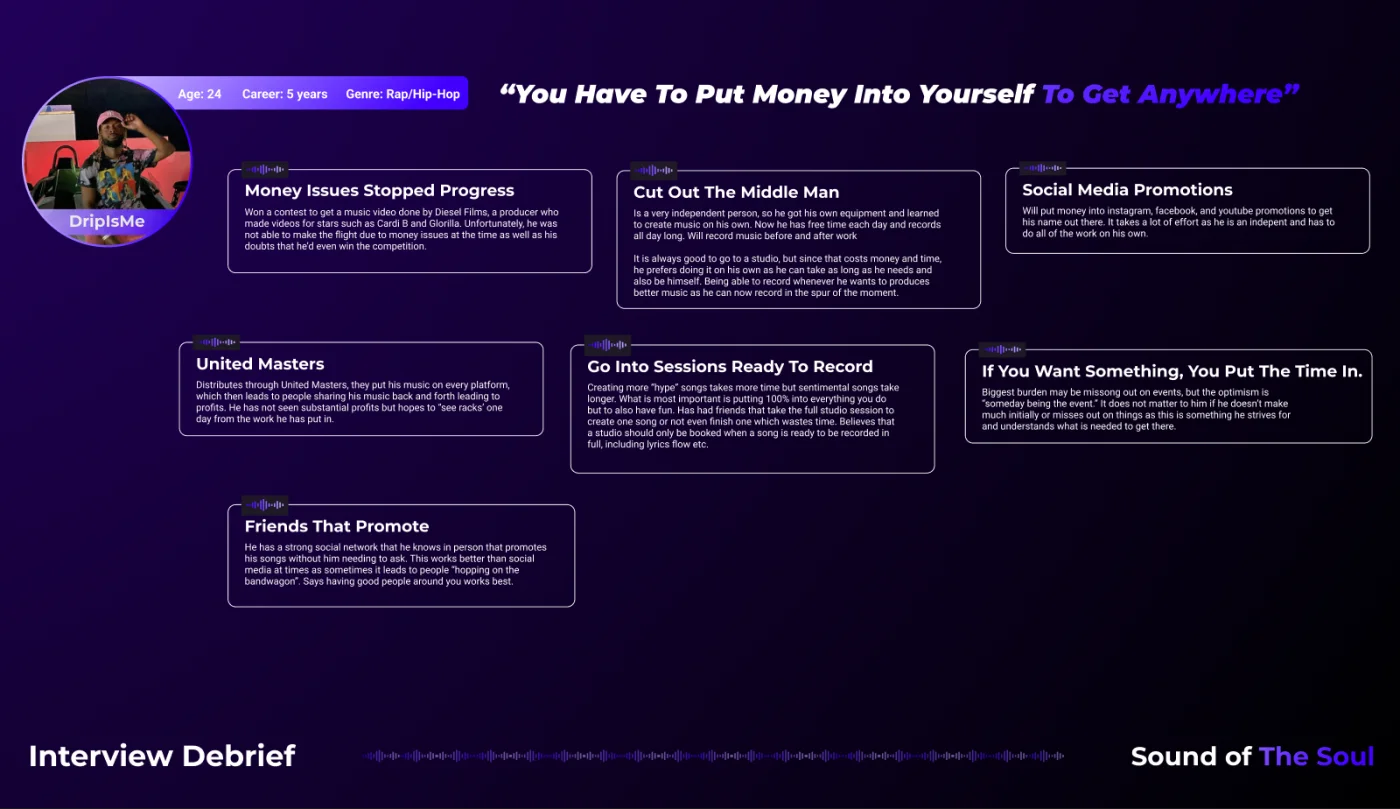
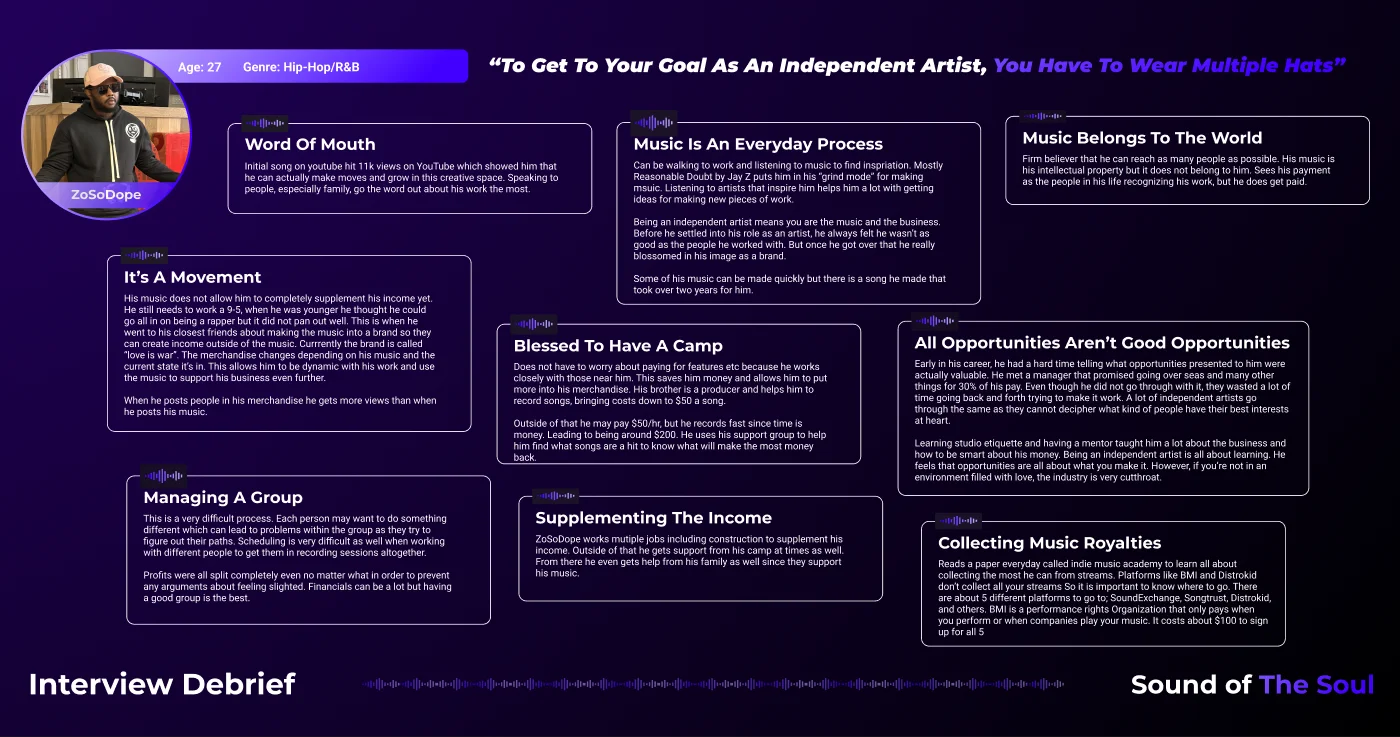
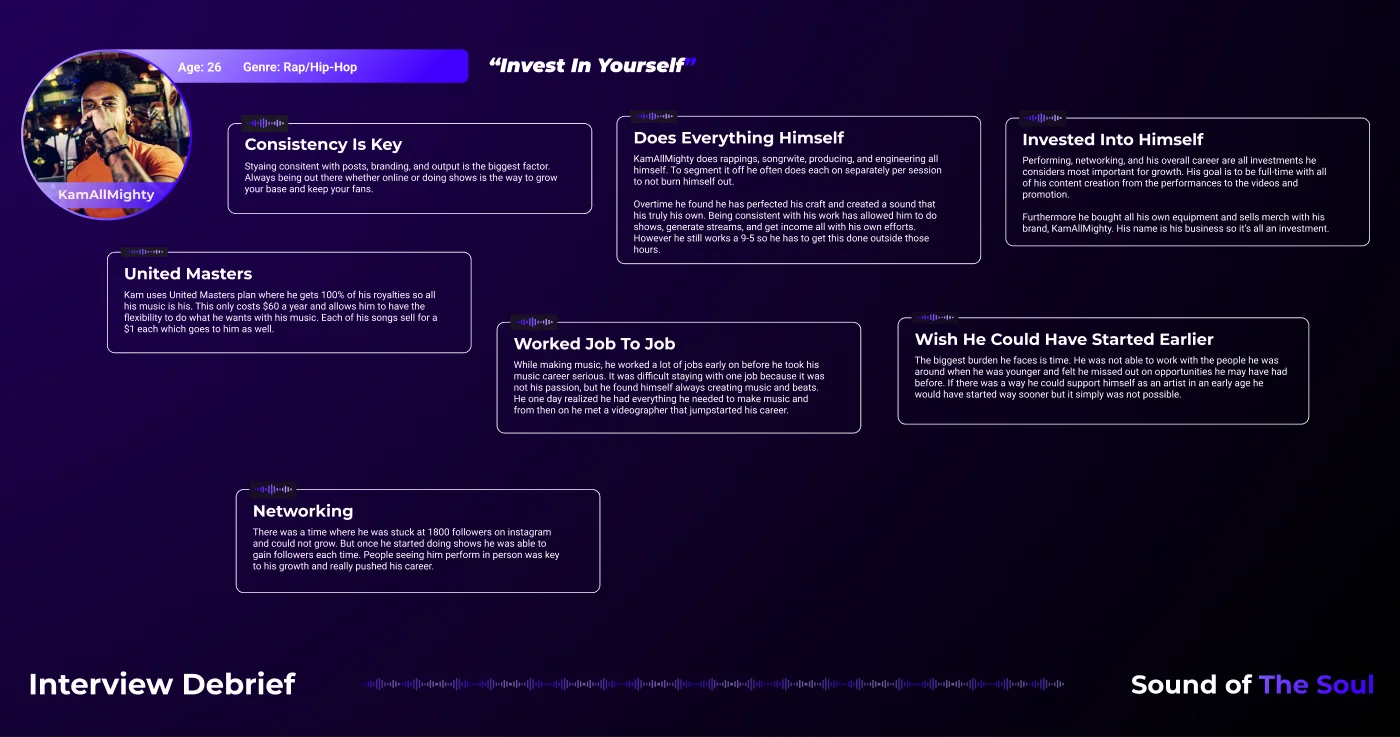
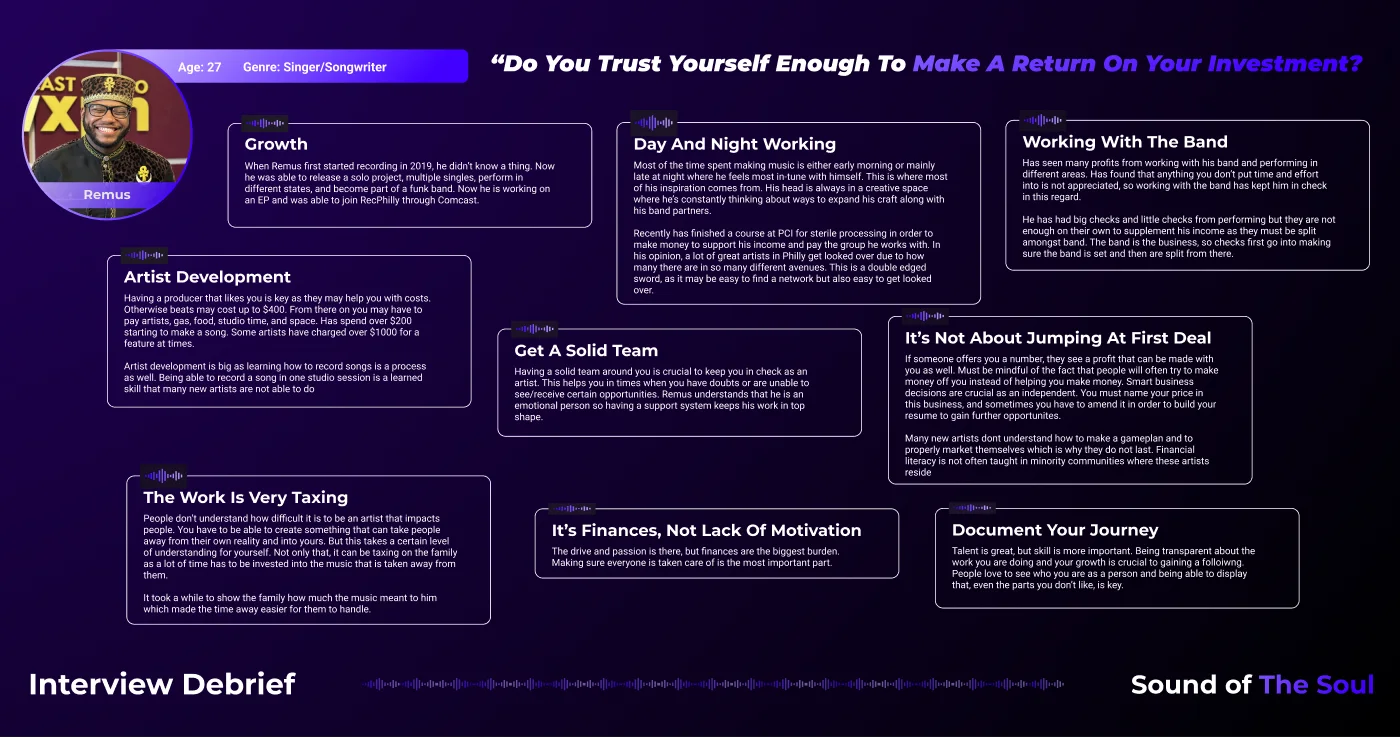
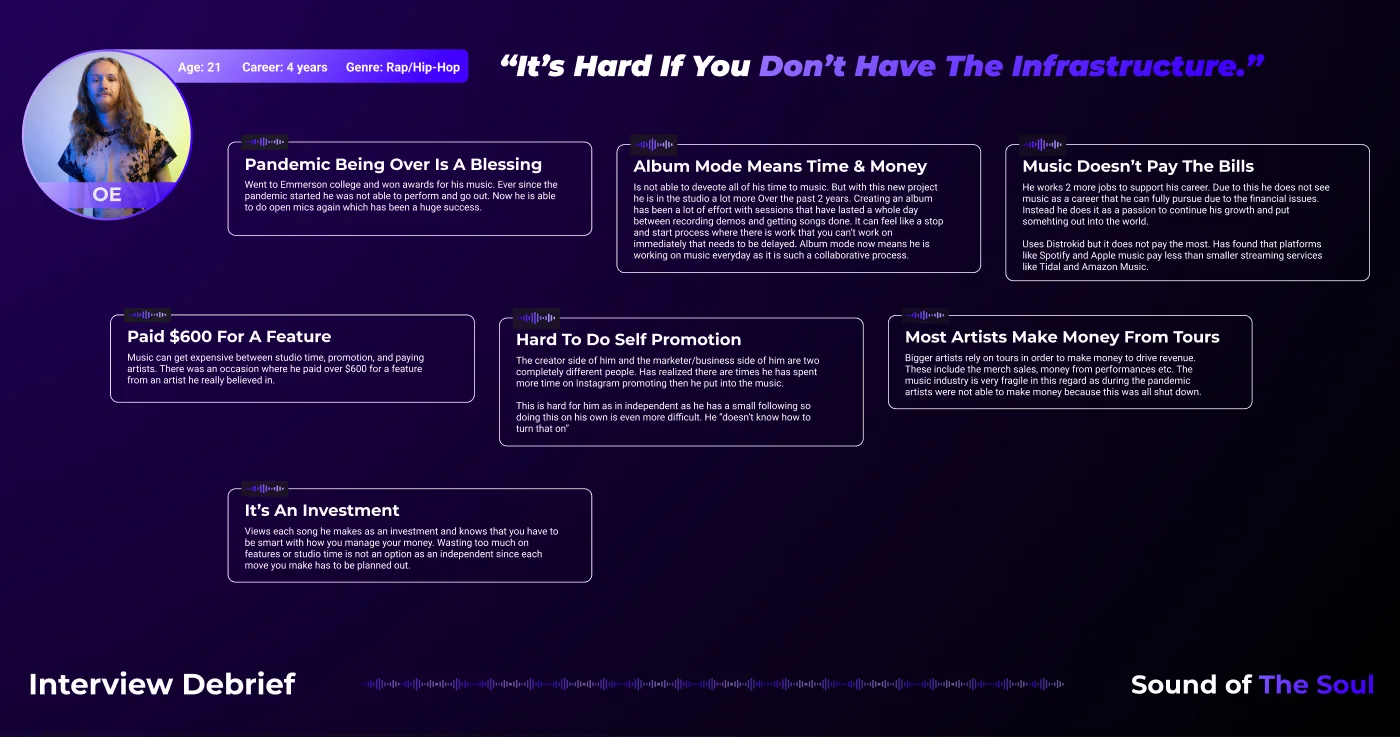
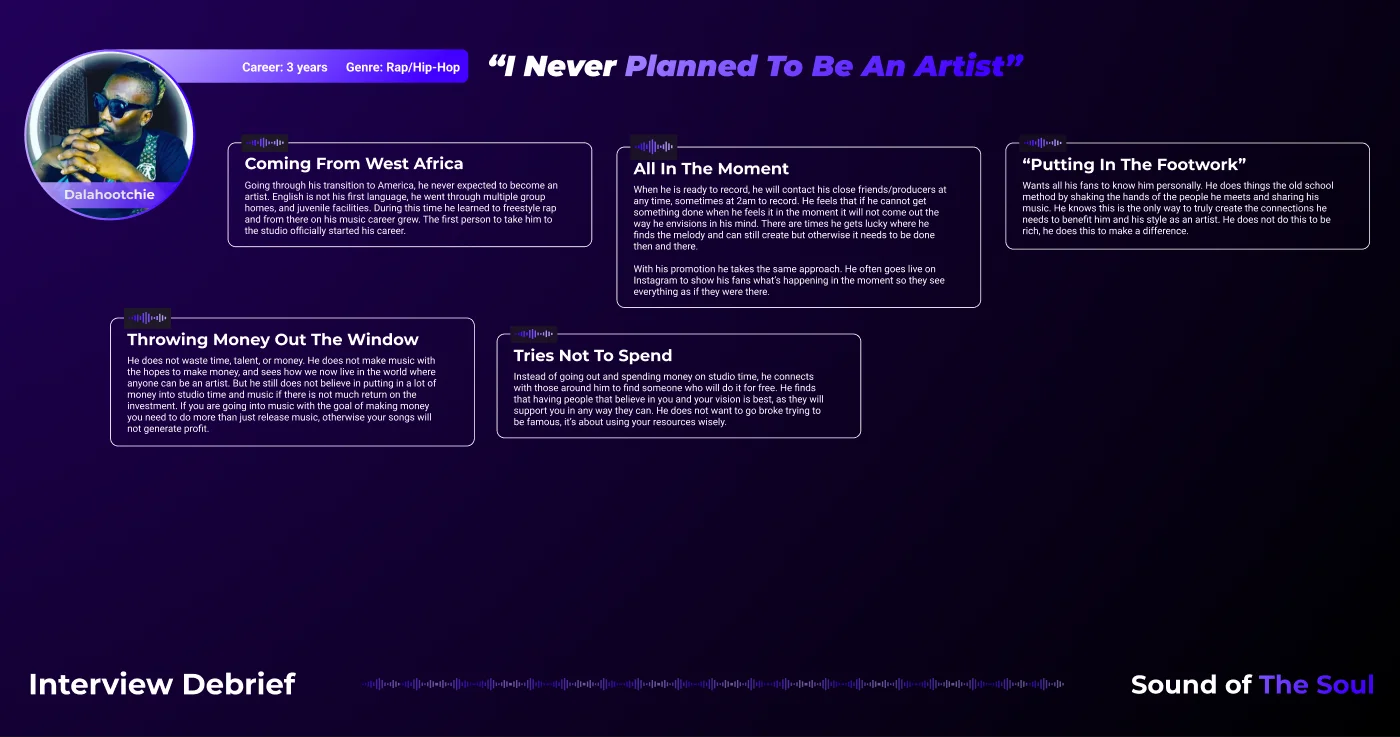
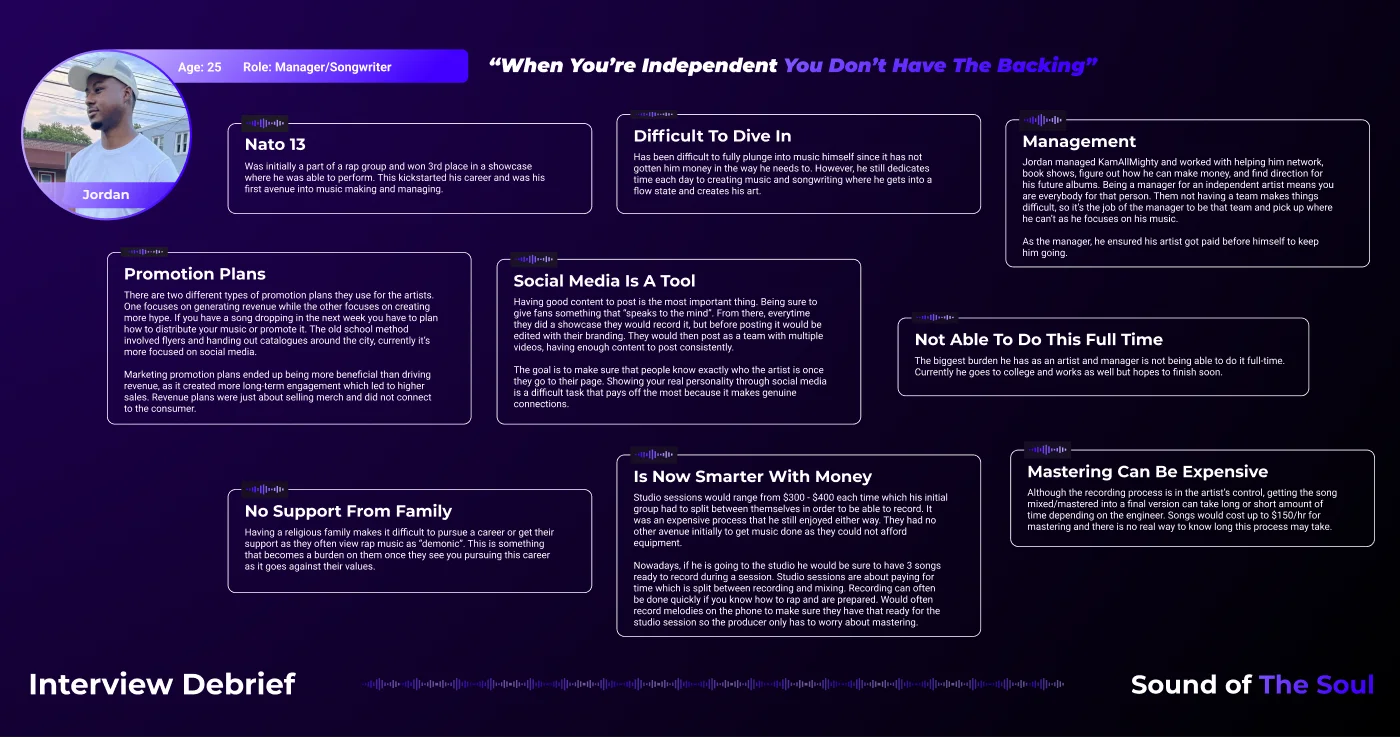
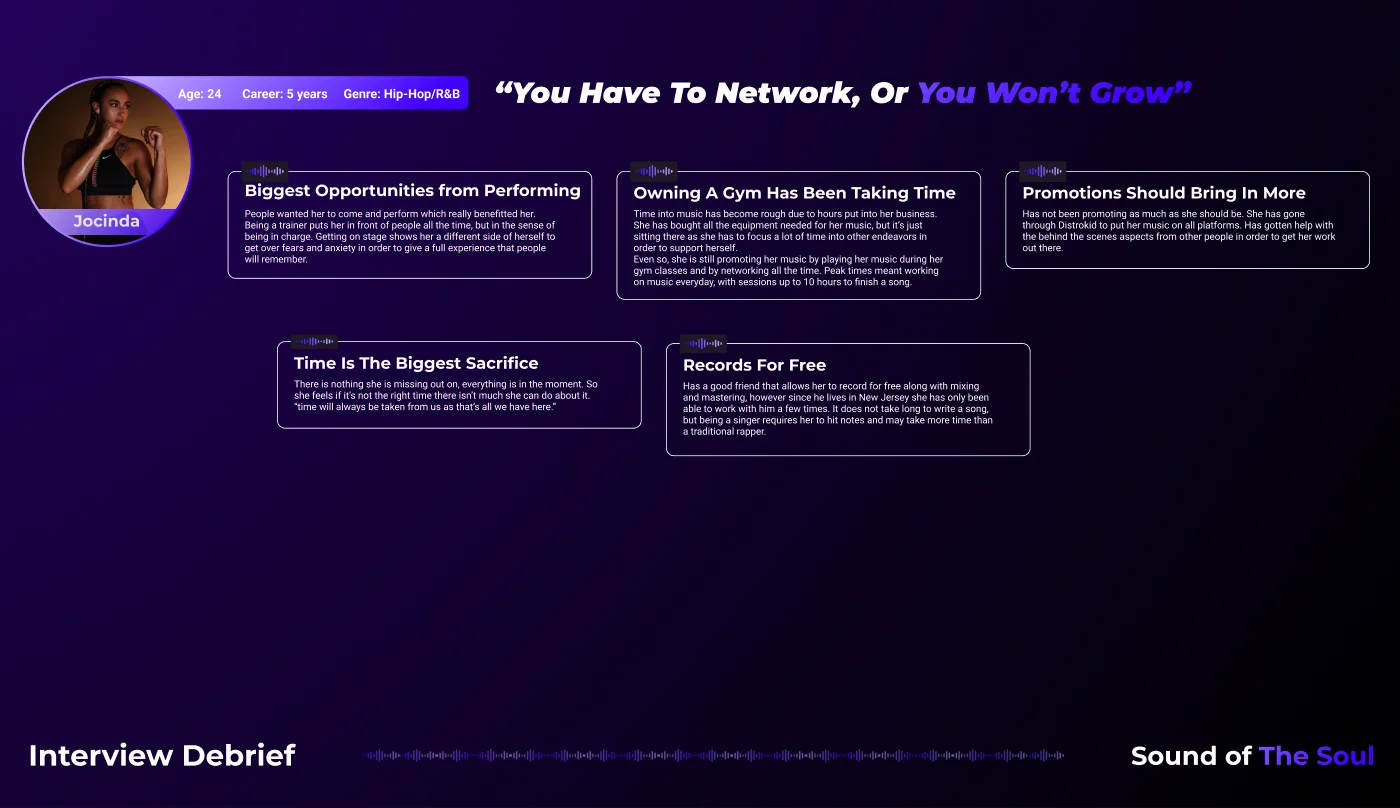
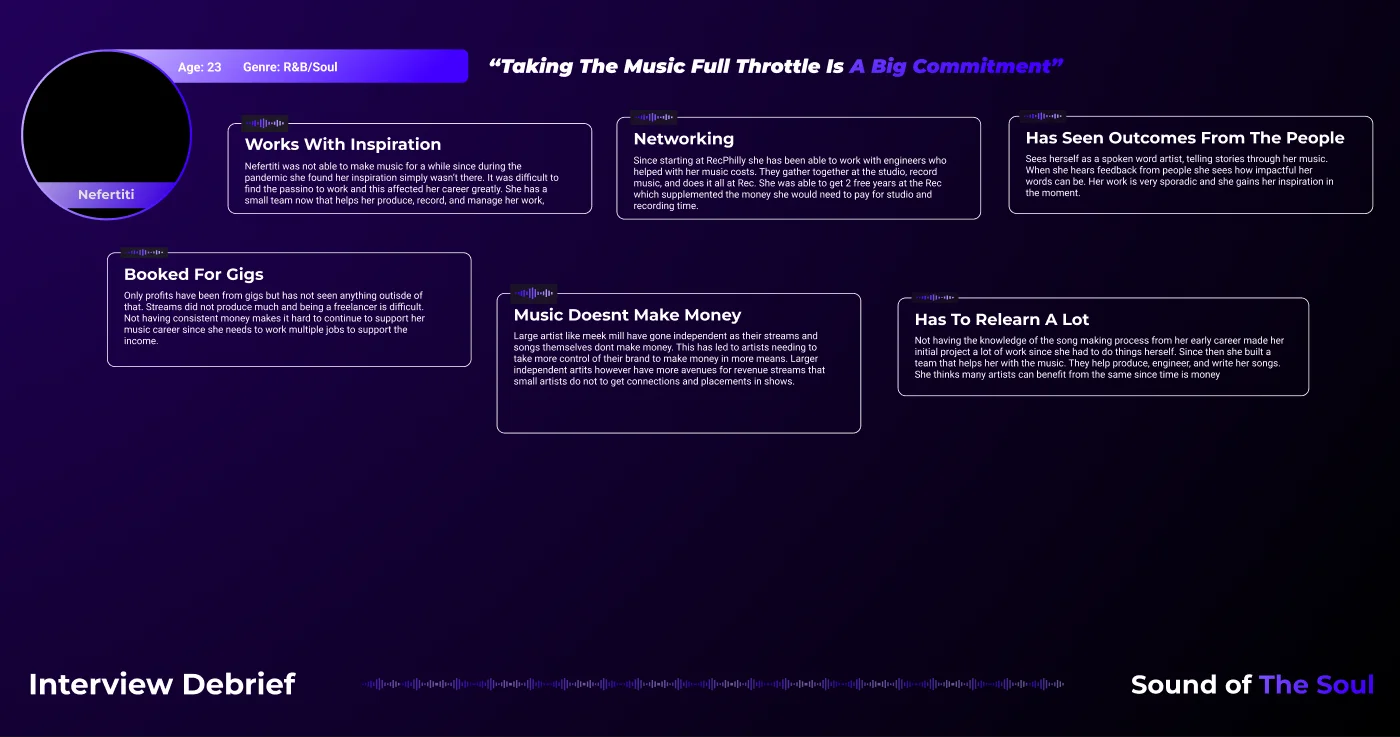
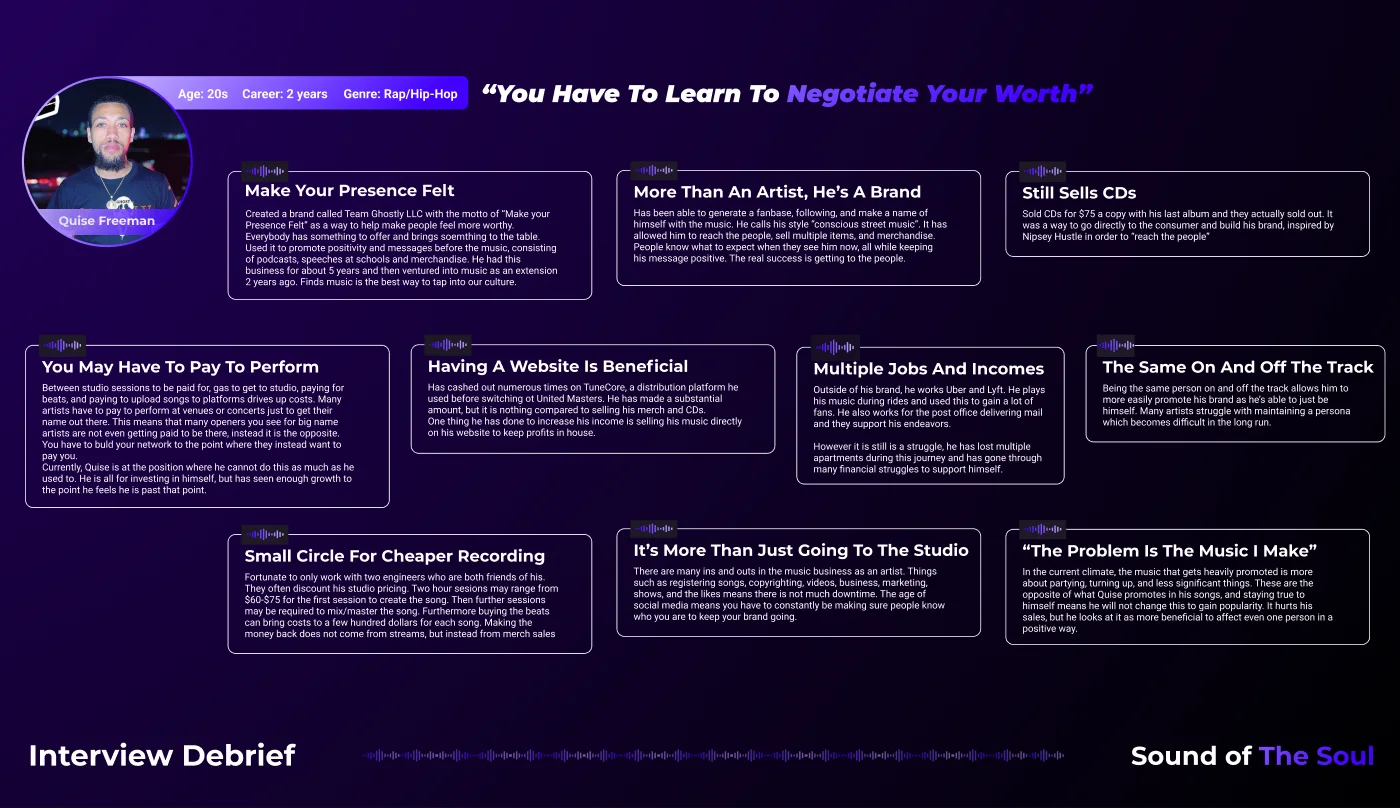
Every conversation got its own one-page debrief: the strongest quotes and findings from that session, tagged and ready for affinity mapping. Click any of these to read the full page.
Numbers From the Room
What It Actually Costs
"I wouldn't call them burdens. I'd call them sacrifices."
CSW, 21, five years making music. Between promotion, performing, and staying sharp, the job never really stops.
"We're doing so much with so little."
Shauna Moon, 27, two years in. Her real cost breakdown: a beat license around $50, stems to make it her own another $100, mixing $75–$100, and studio time $25–$50 an hour.
"You have to put money into yourself to get anywhere."
DripIsMe, 24, five years in. He cut the studio out entirely: bought his own equipment and records on his own time, which he calls his biggest unlock.
"The problem is the music I make."
Quise Freeman, two years in. Not everyone I talked to blamed the system. He stays true to a message that doesn't chase what's currently popular, and accepts that the tradeoff costs him sales.
The Research
What I Actually Asked
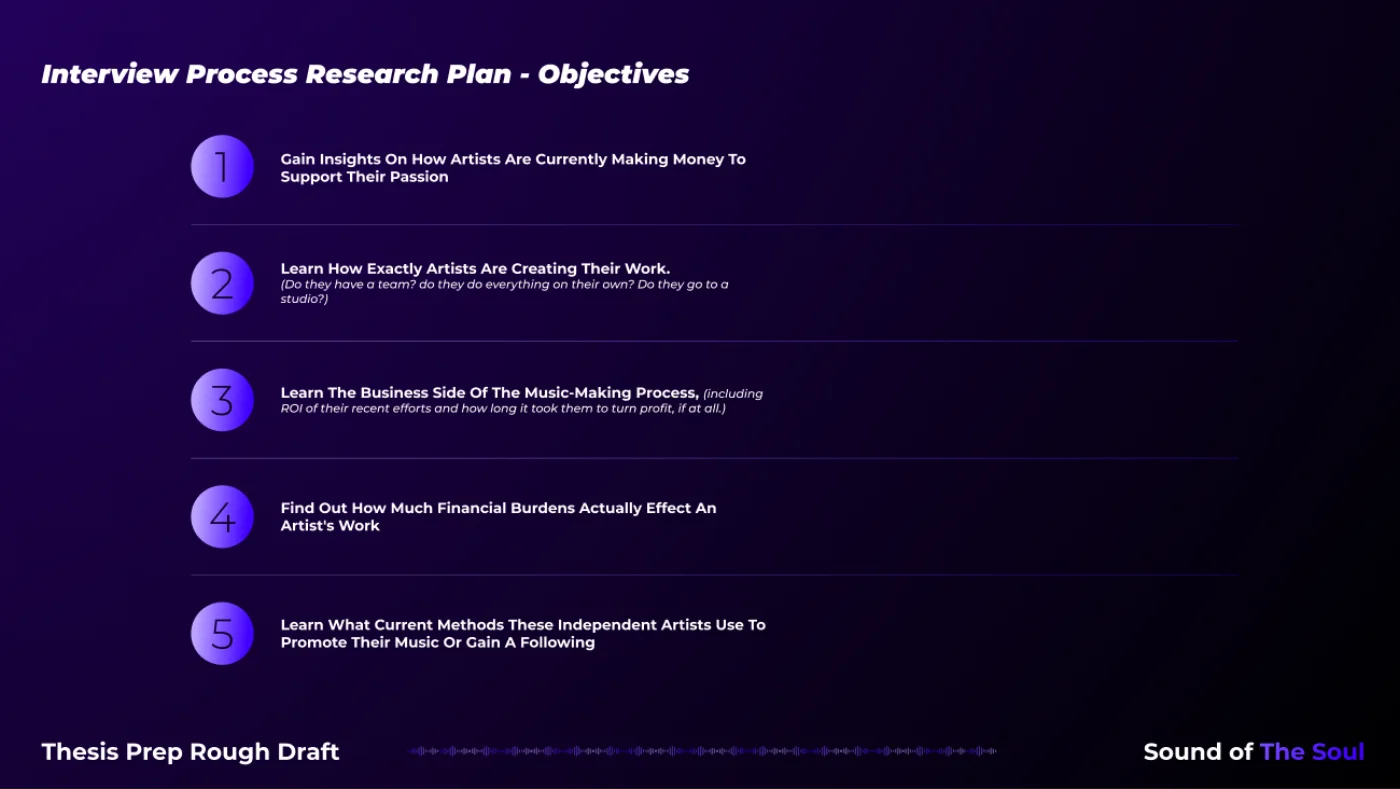
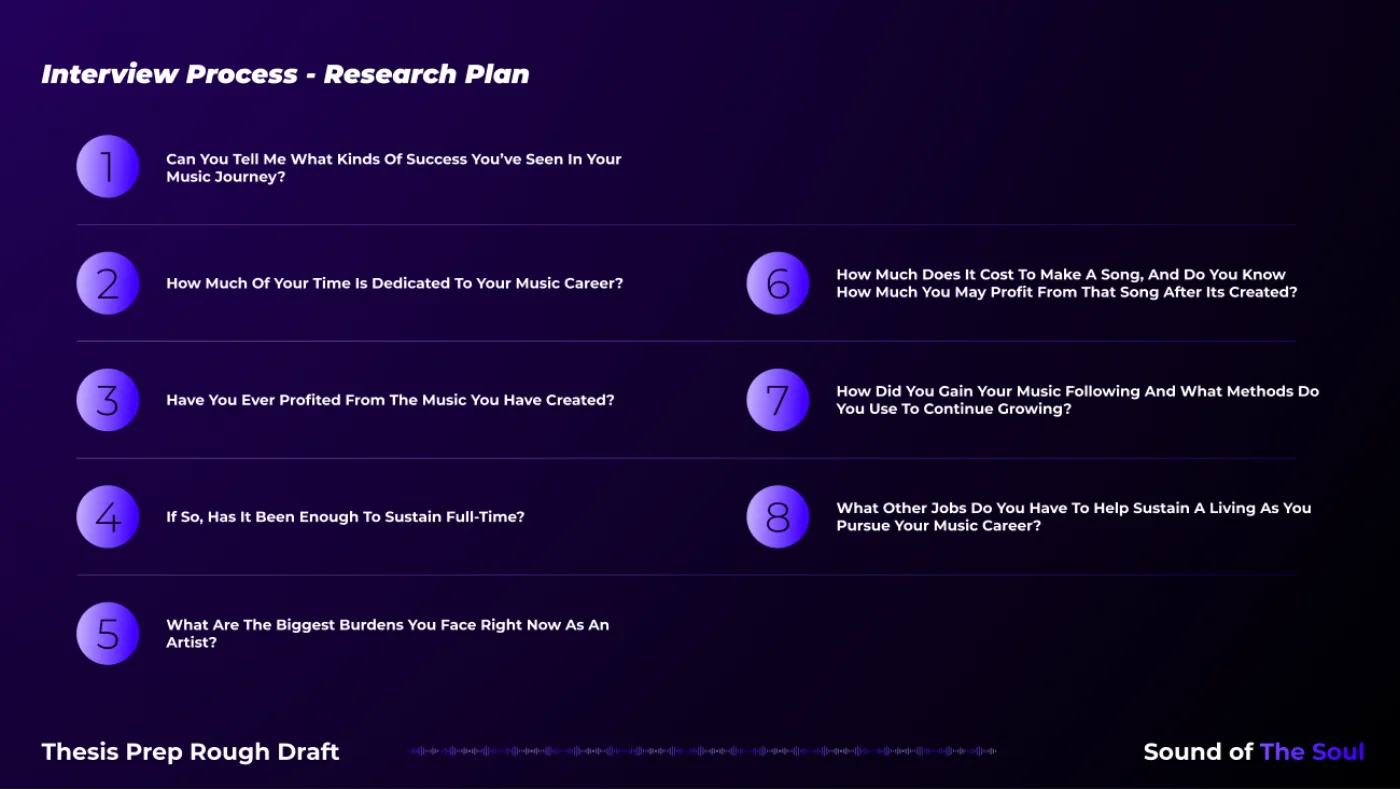
Every interview worked from the same five objectives: learn how artists are currently making money to support their passion, learn how they're actually creating their work, learn the business side of the music-making process, find out how much financial burdens actually affect an artist's work, and learn what methods they use to promote their music or grow a following.
Synthesis
Turning Twelve Conversations Into Patterns
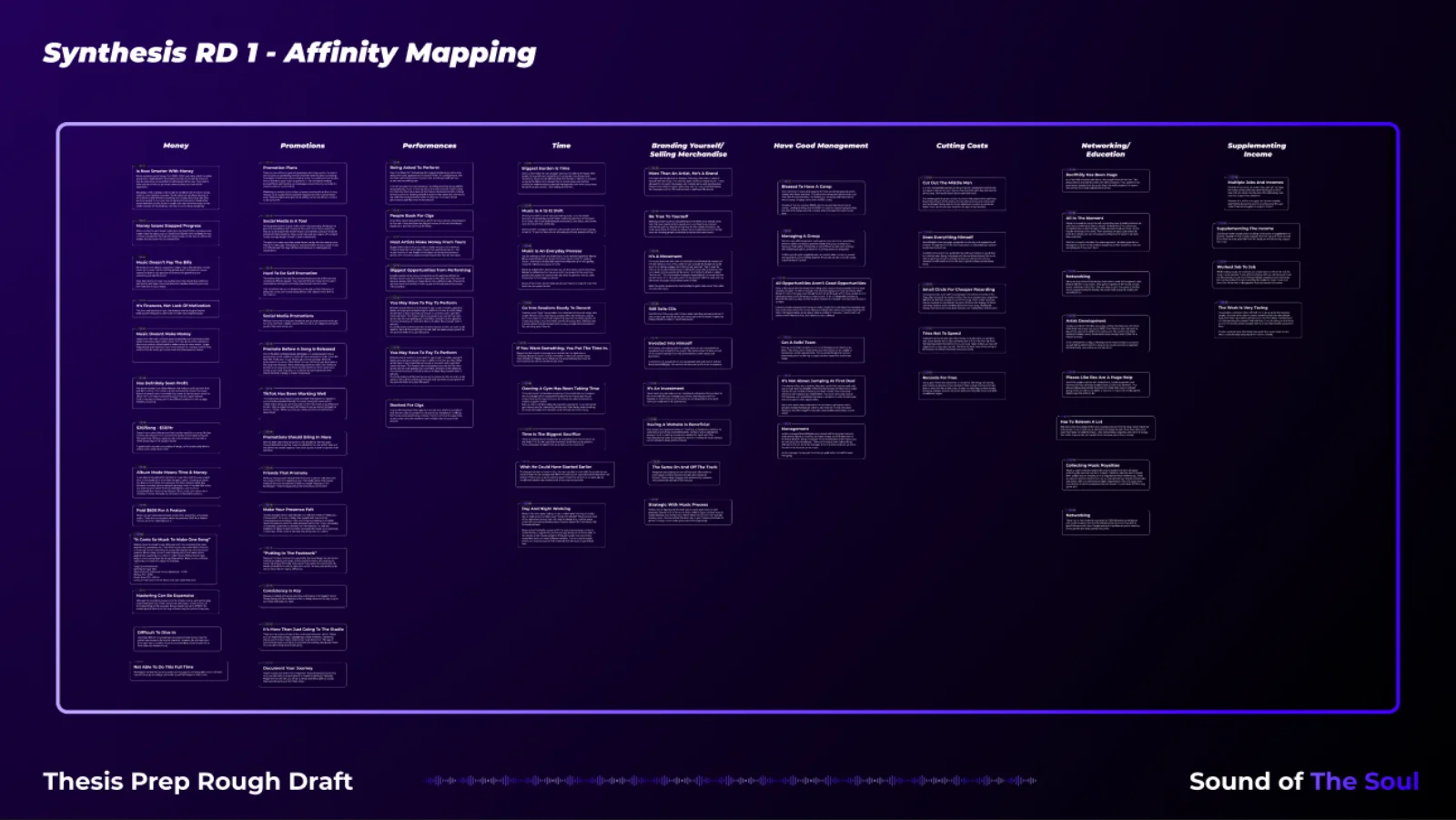
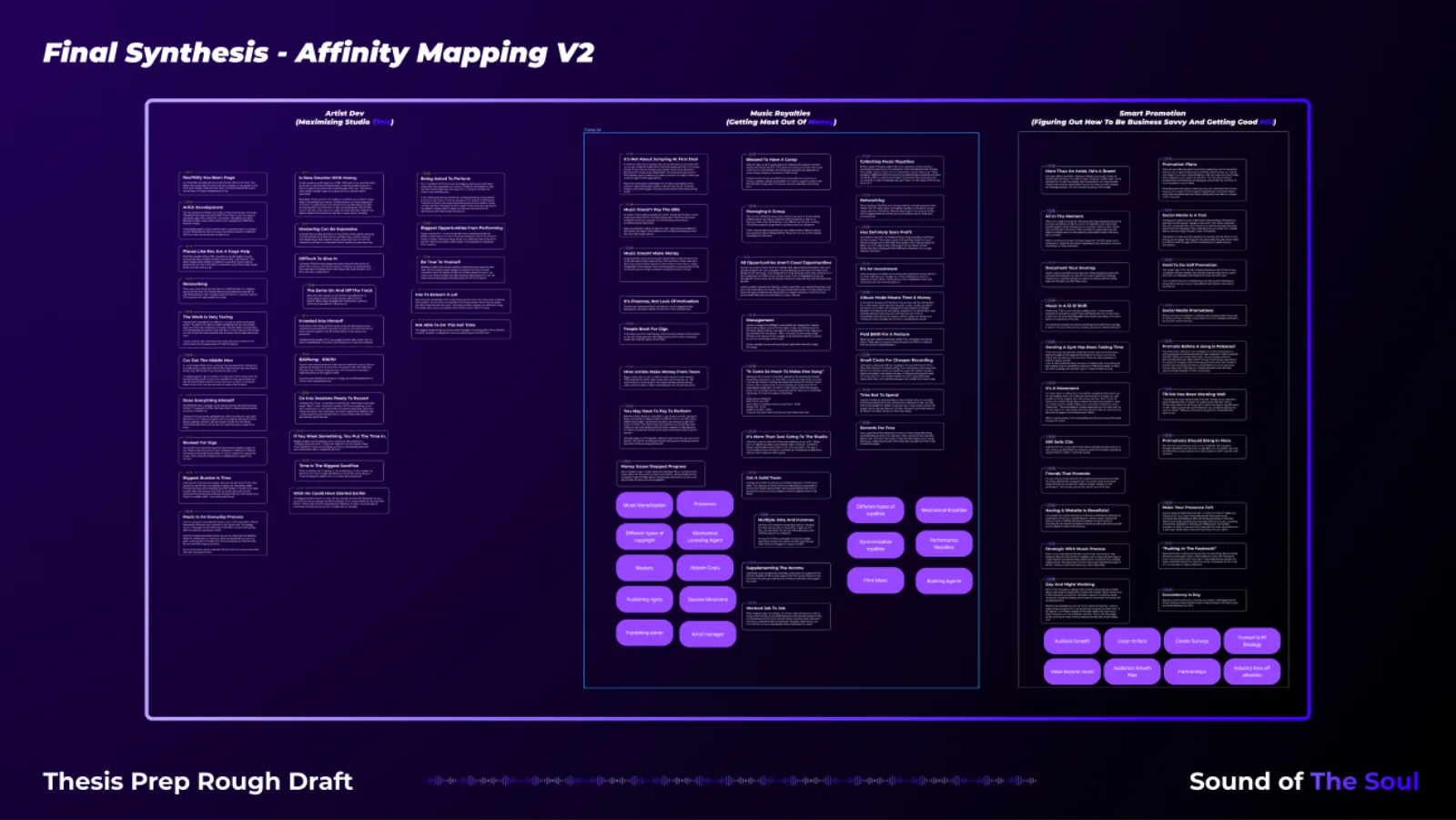
Every debrief got broken into individual notes and sorted by hand. The first pass turned up nine categories: Money, Promotions, Performances, Time, Branding & Merch, Management, Cutting Costs, Networking & Education, and Supplementing Income.
Where the Notes Kept Pointing
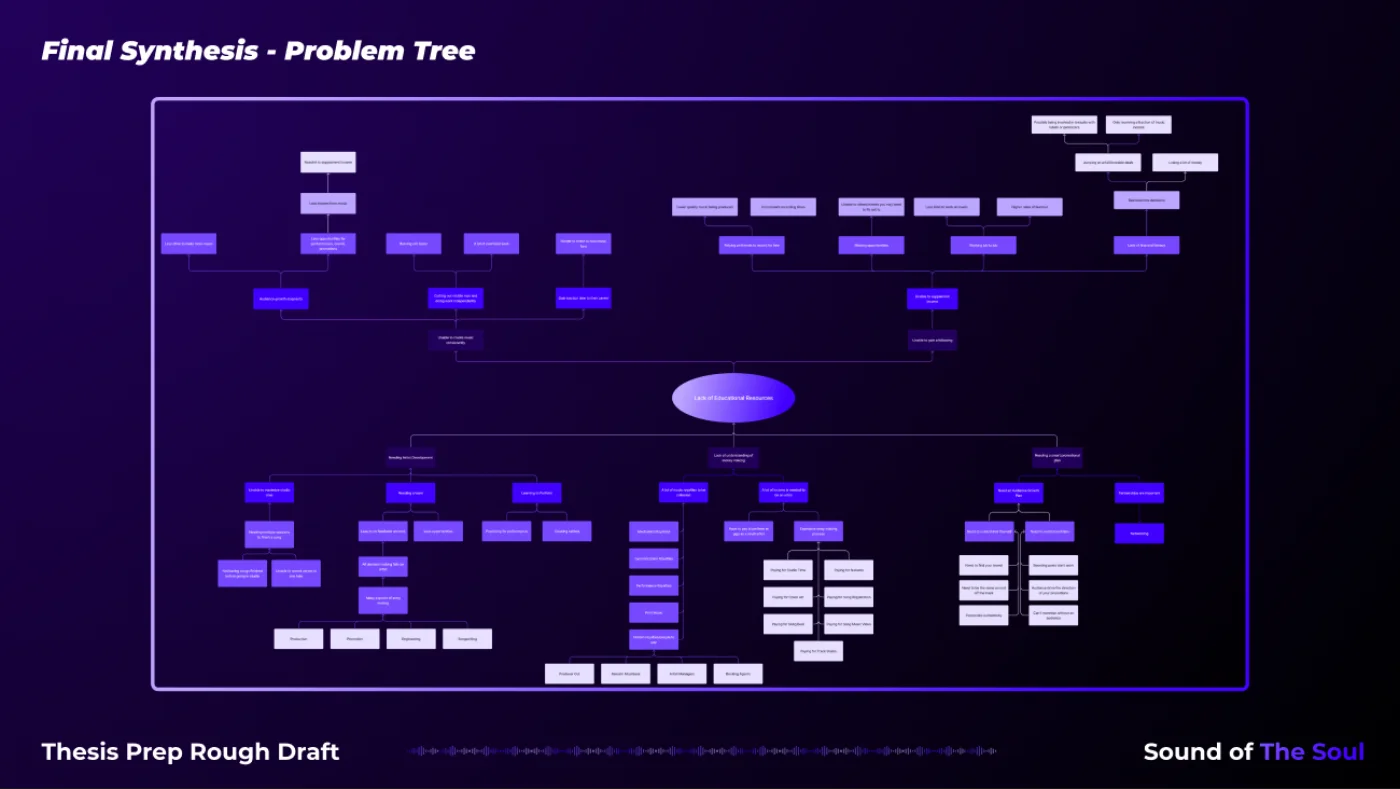
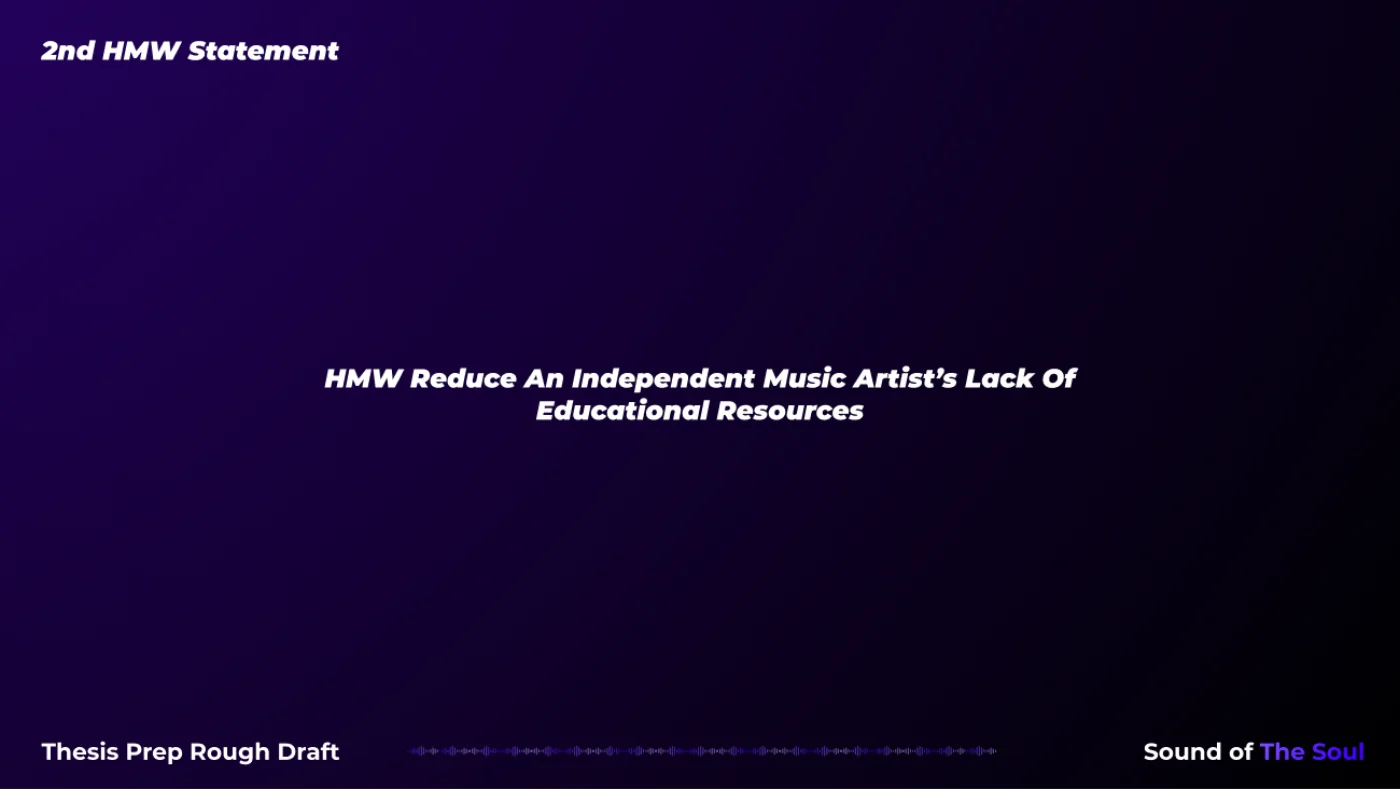
Sorting those notes into a problem tree kept resolving to the same root, no matter which branch I followed: a lack of educational resources. That gave me a second how-might-we to test: how might we reduce an independent artist's lack of educational resources?
Mapping the Actual Journey
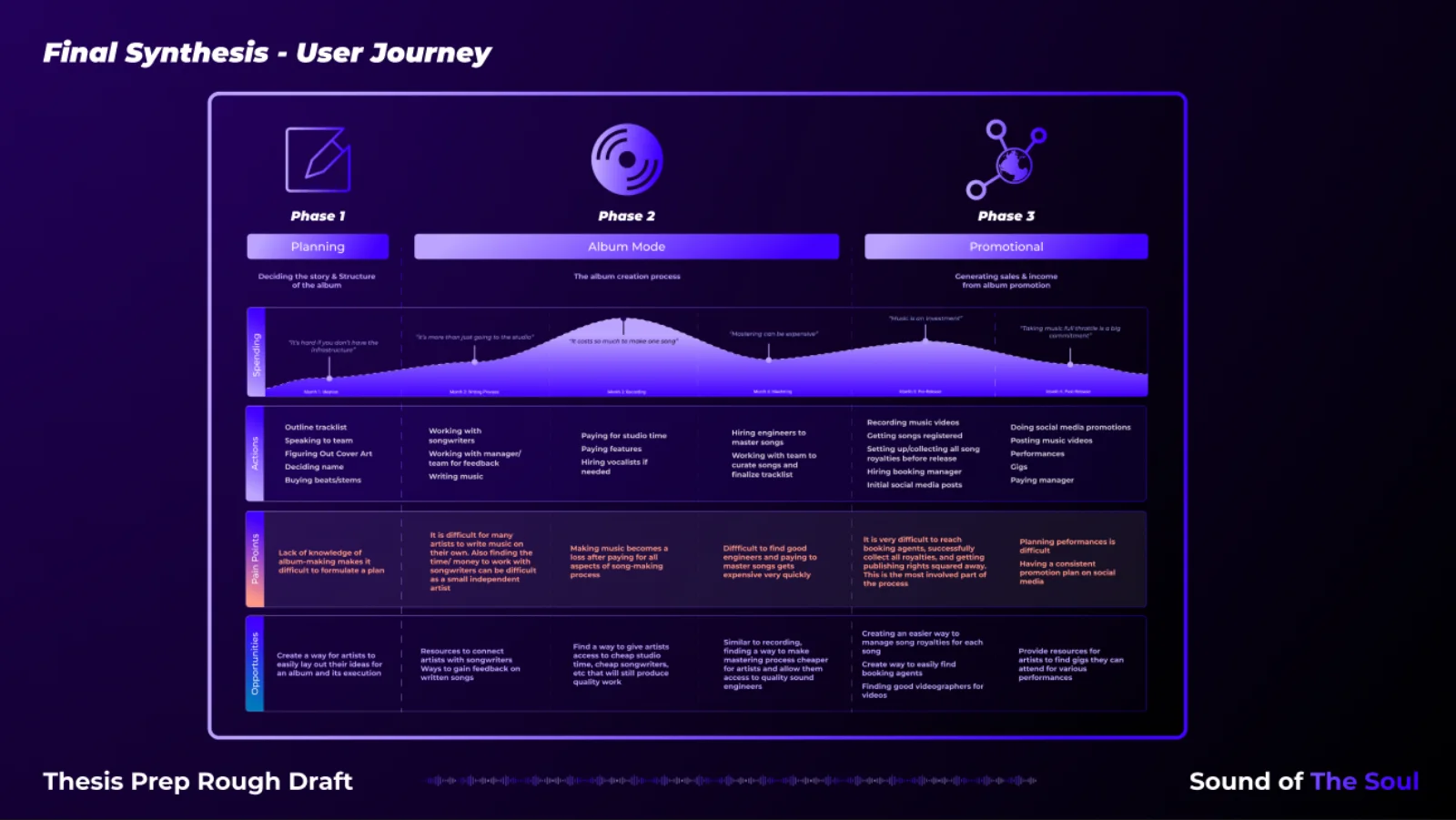
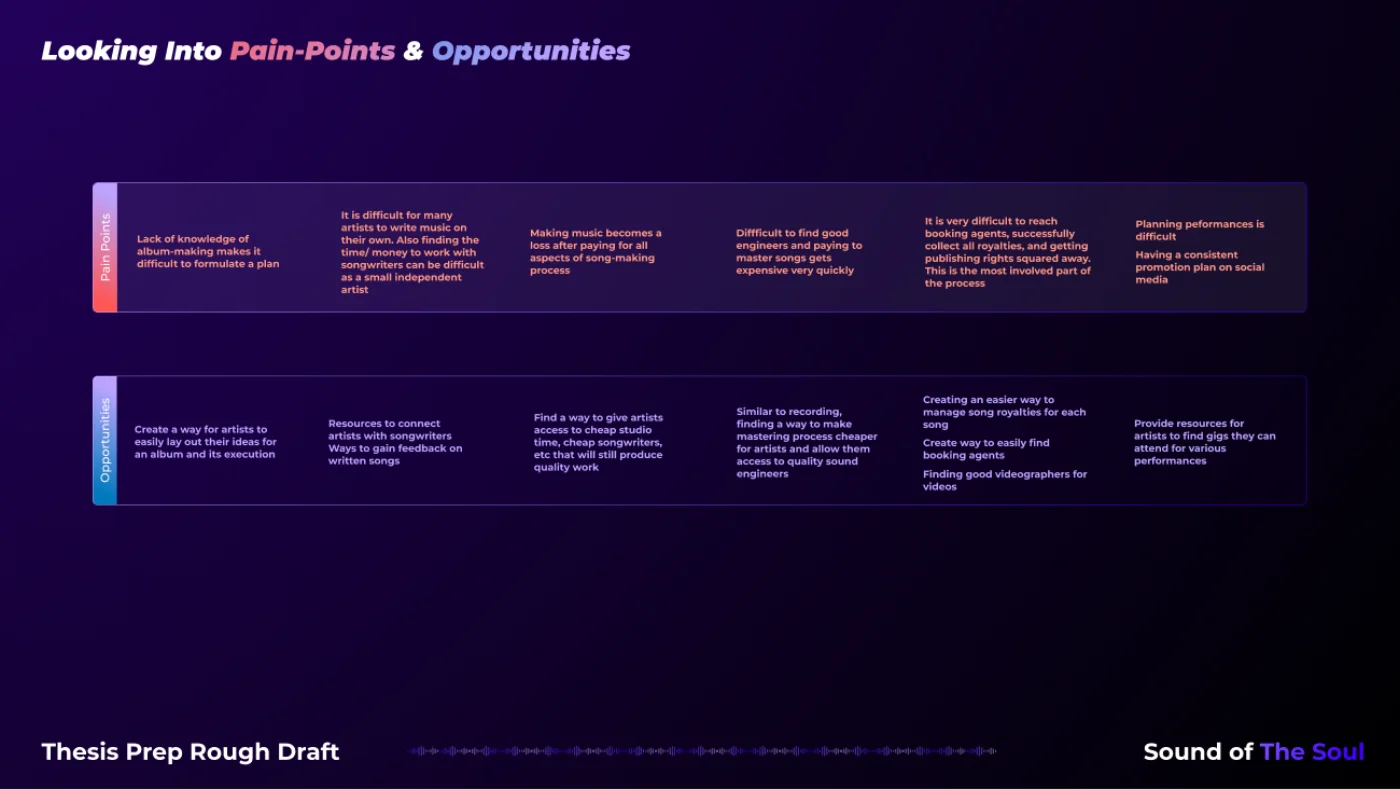
To see where that lack of resources actually hits, I mapped a full album cycle across three phases: Planning, Album Mode, and Promotion, plotting spending, actions, pain points, and opportunities against each one. Spending peaks hardest in the middle of Album Mode, right where artists described mastering and studio time as the most expensive, least negotiable part of the process.
Conclusions
Three Clusters, Not Nine
A second synthesis pass regrouped those nine categories into three: Artist Development (maximizing studio time), Music Royalties (getting the most out of the money already coming in), and Smart Promotion (being business-savvy about getting heard). Between the problem tree, the journey map, and this regrouping, the same conclusion kept surfacing: the burden independent artists describe isn't really a lack of hustle. It's a lack of access to the education and infrastructure that other paths to a music career take for granted.
Further Research
Going Deeper on Money and Promotion
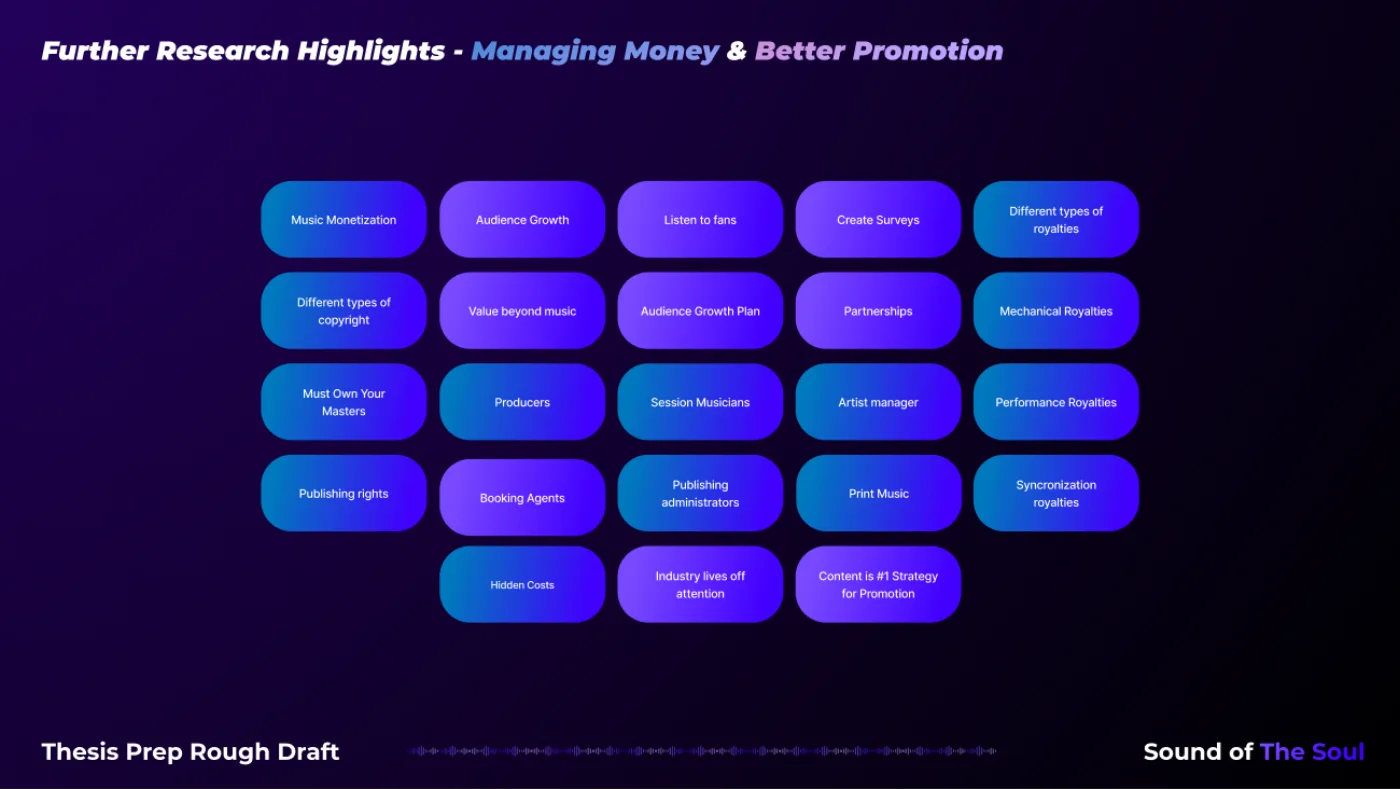
With that read on the problem, I went back for a second round of research focused specifically on the mechanics: royalty types, copyright, distribution, and what actually moves an audience. Mechanical royalties, performance royalties, and sync royalties all pay differently and through different channels. Owning your masters matters. And the research kept coming back to one line: content is still the number one strategy for promotion, ahead of paid ads or PR.
Checking the Field
I also looked at what already exists to help independent artists, both the platforms that get artists heard and the resources meant to help them get better.
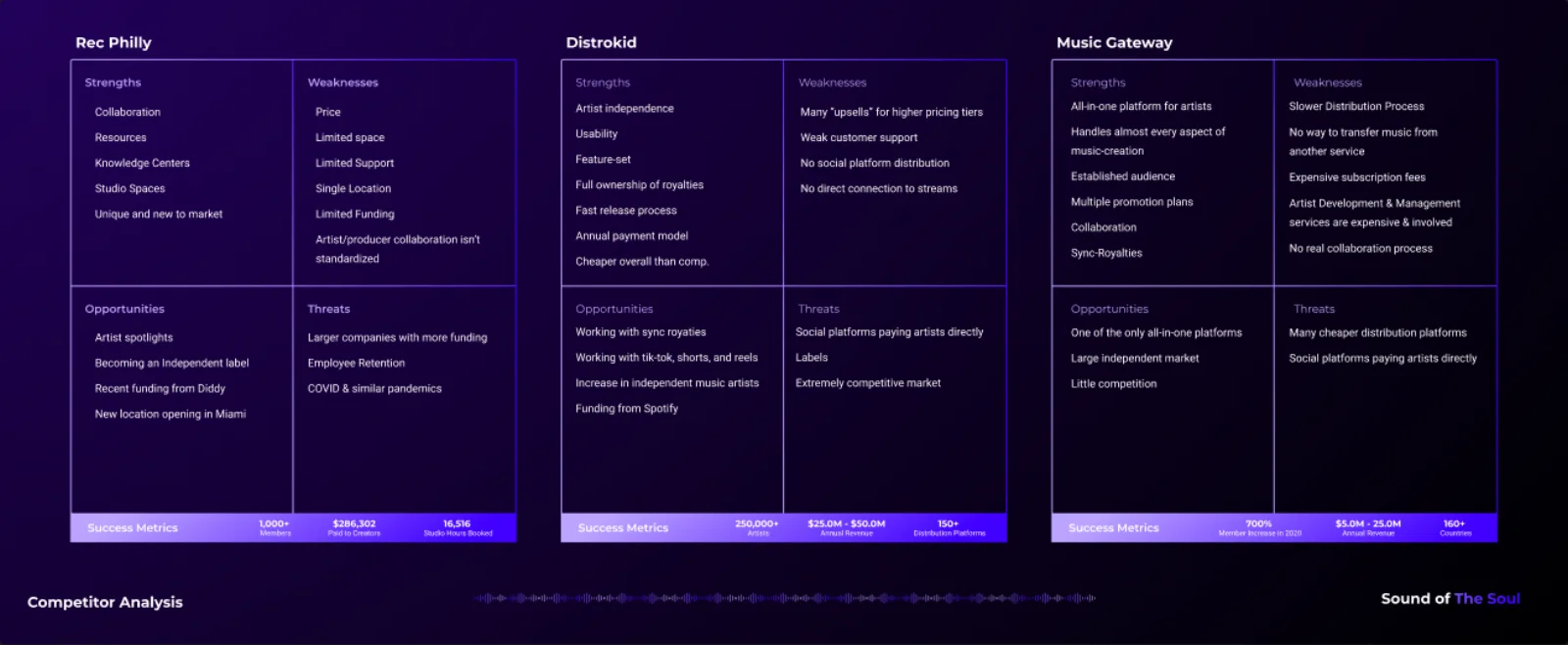
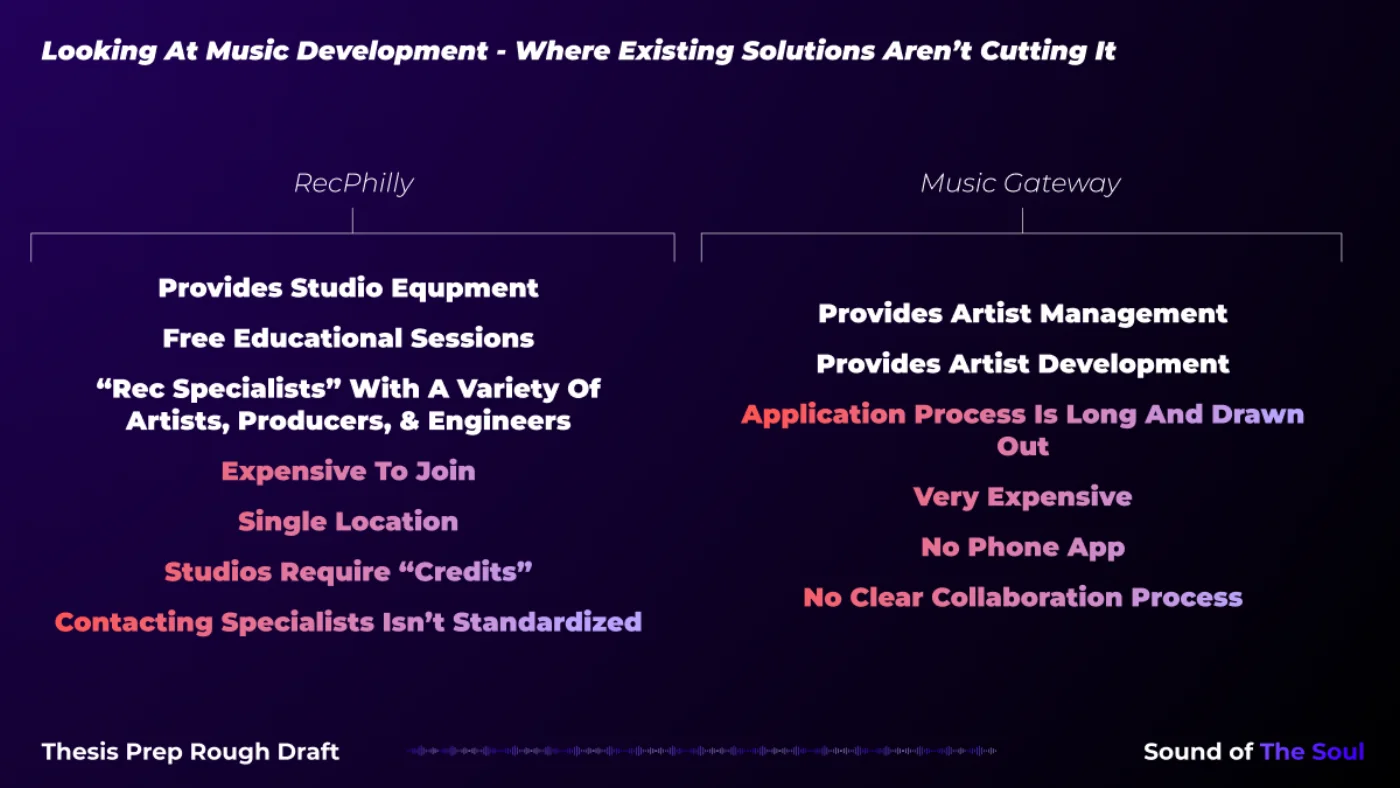
The Gap That Explained Everything
Laid side by side, the gap became obvious. Artists looking for help distributing music can choose from Tunecore, Distrokid, CD Baby, United Masters, Bandcamp, Music Gateway, Amuse, Ditto, SpinnUp, AWAL, Levelup, and more. Artists looking for help actually developing as artists have RecPhilly, Music Gateway, and online job searches. That's it.
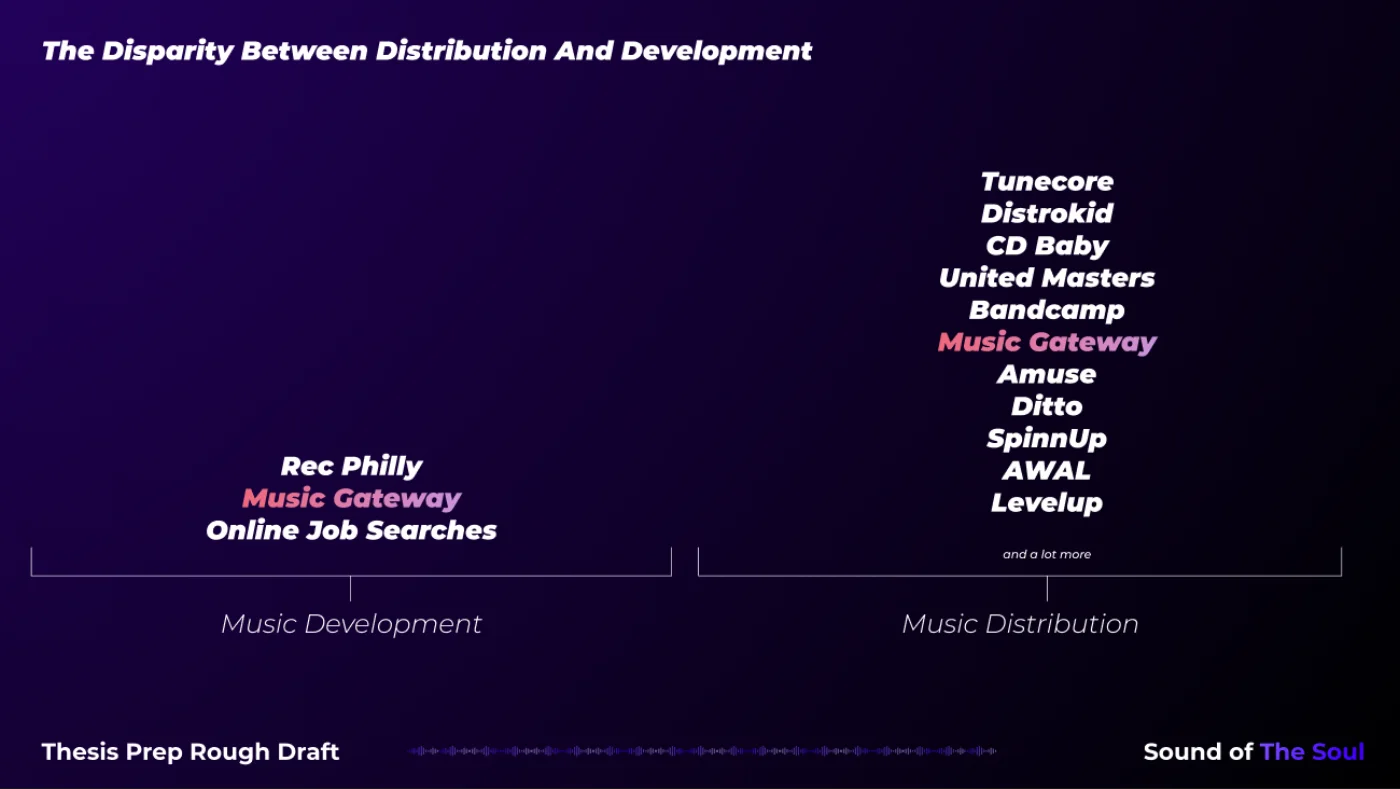
11+
Distribution platforms available to independent artists
3
Real development resources available to independent artists
The Decision
Four Things an Artist Needs
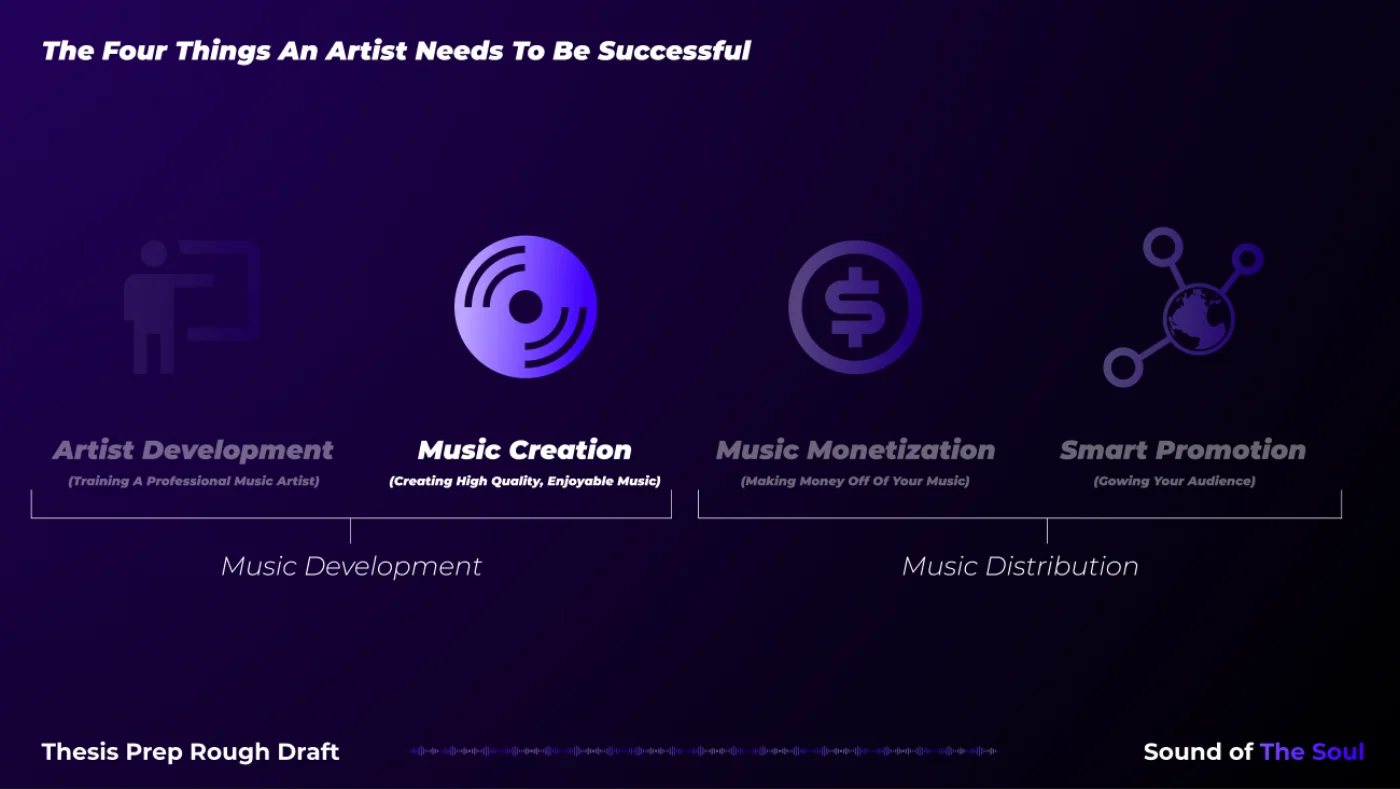
Every music career comes down to four things: Artist Development (training a professional music artist), Music Creation (making high-quality, enjoyable music), Music Monetization (making money off that music), and Smart Promotion (growing an audience). The first two make up Music Development. The last two make up Music Distribution. The research showed Music Distribution is already flooded with options. Music Development is not.
The Finalized Question
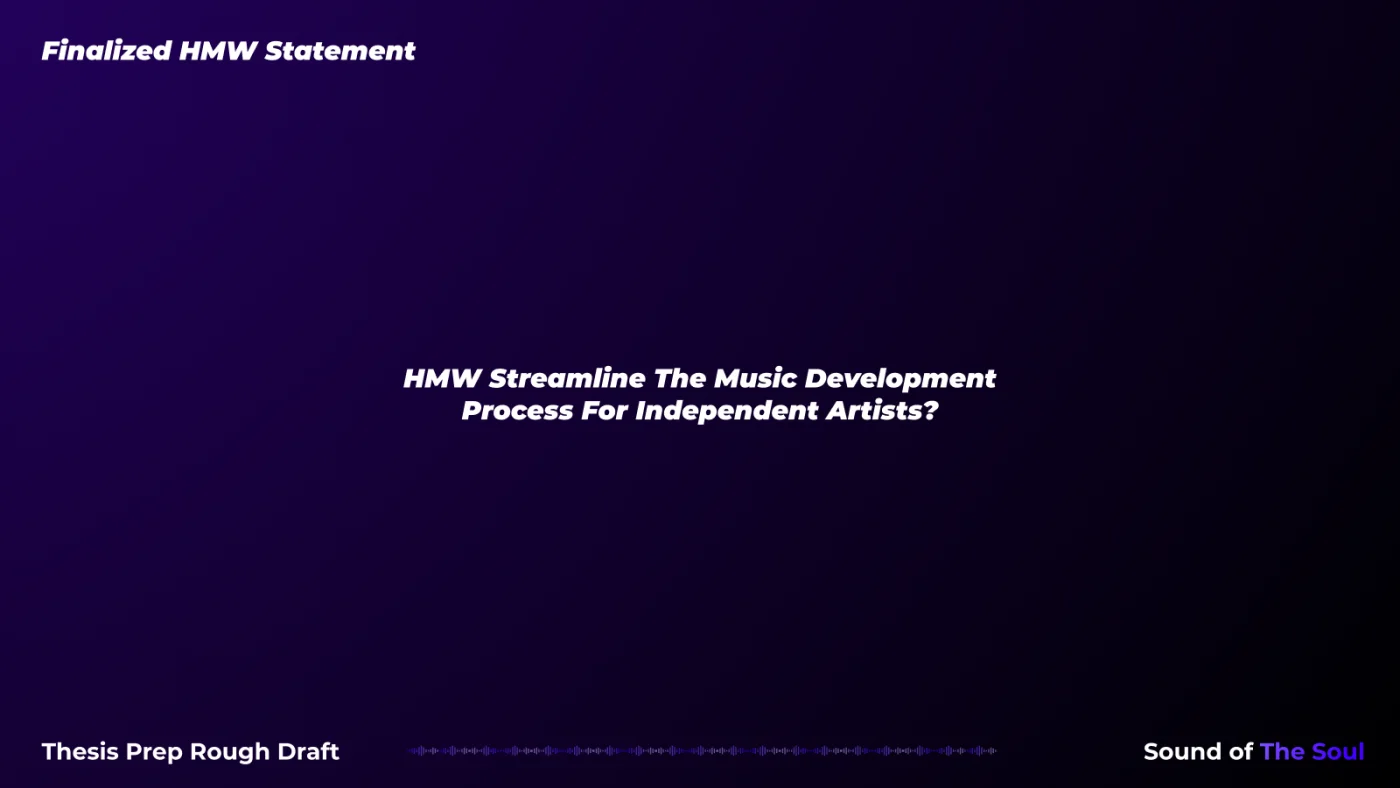
That gap is where the project landed: how might we streamline the music development process for independent artists? Independent artists make up 41.4% of the industry, most of them worried about money, most of them navigating labels that still control the resources they'd actually need, and almost none of them with anywhere real to go for the development side of the work.
The Series
Watch the Episodes
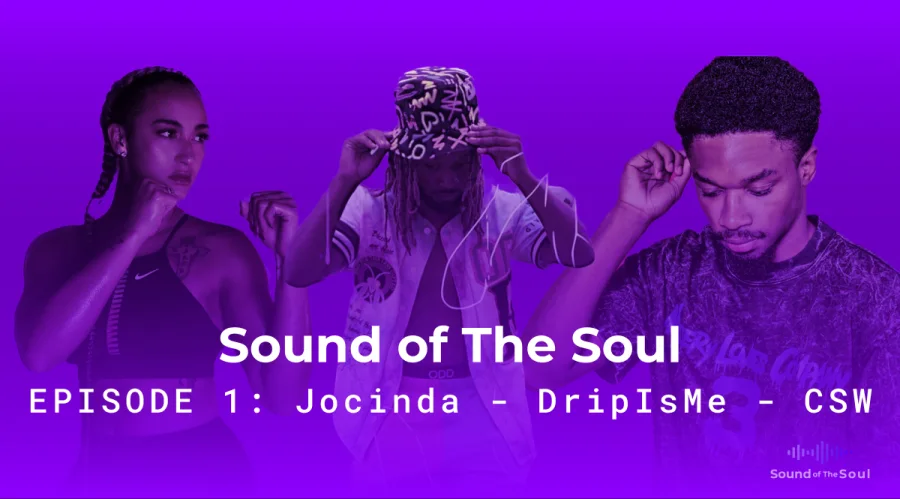
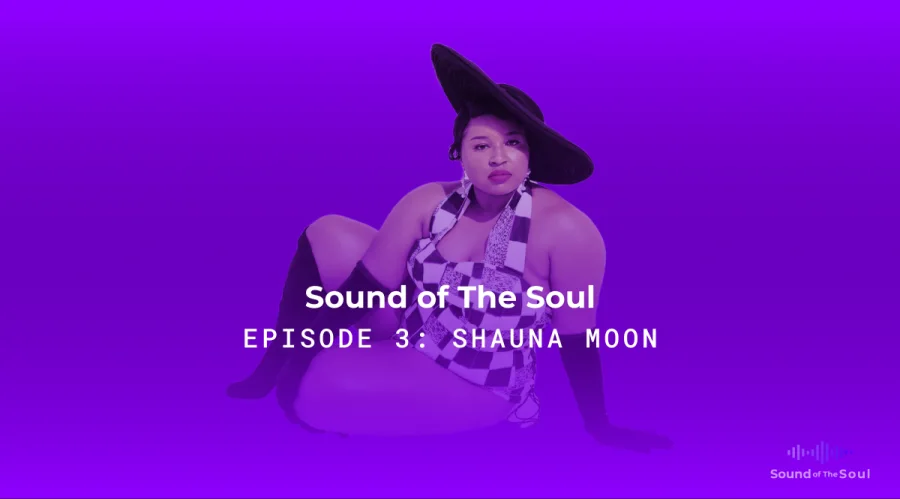
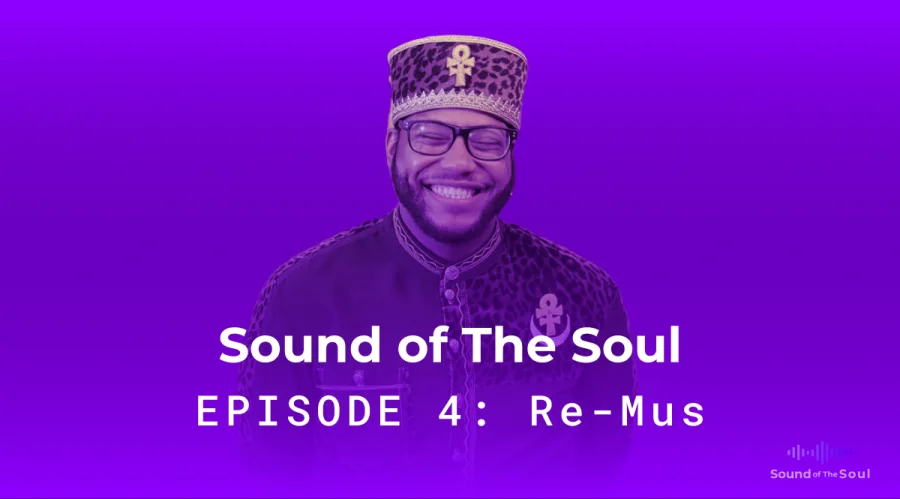
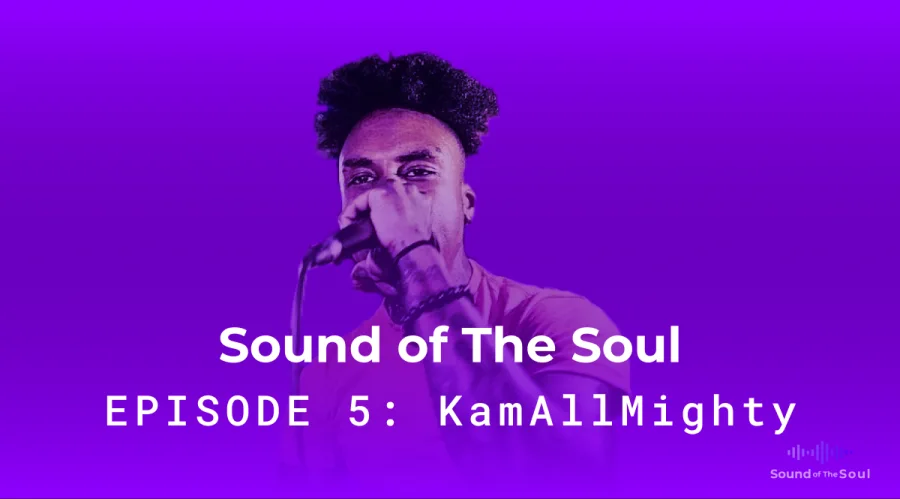
The four episodes released so far, each a full conversation with a Philadelphia independent artist. Click to play right here.
A Little Extra
Mapping the Conversation Itself
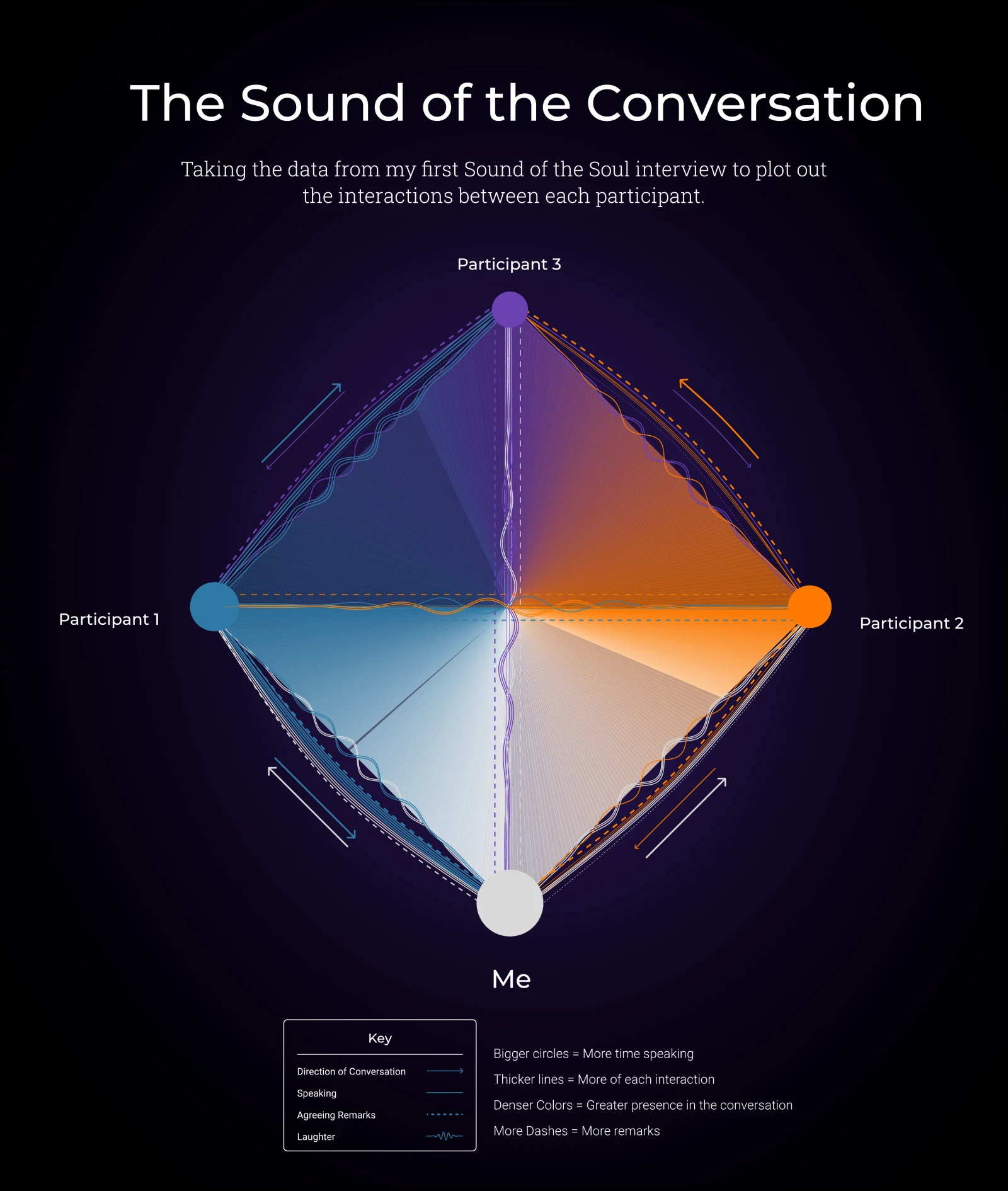
After the first episode, I got curious about the conversation itself, not just what was said. I pulled the raw interaction data (who spoke, who agreed, who laughed, and when) and plotted it: bigger circles for more time speaking, thicker lines for more back-and-forth between two people, denser color for a stronger presence in the room, and more dashes for more remarks.
What's Next
Three More In The Vault
Eight episodes were recorded for this project. Four are live on YouTube today, with the rest, including a conversation with ZoSoDope, still on the way.